
The banbury mixer has earned its place as one of the most essential machines in the rubber and plastic manufacturing industry. Its primary role is to blend raw materials, additives, and fillers into a consistent, homogeneous compound, which is crucial for producing high-quality products. Invented by Fernley H. Banbury in the early 20th century, the machine has since become a cornerstone of elastomer and thermoplastic processing.
In today’s industrial landscape, Banbury mixers are indispensable in a variety of applications, ranging from tire production, footwear, and automotive components to specialty rubber and plastic products. The machine is renowned for its robust design, precise control, and efficient mixing process, which guarantees uniformity in the final compound. By understanding the working principle of Banbury mixers, manufacturers can maximize operational efficiency, reduce waste, and ensure consistent product performance.
Overview of Banbury Mixer
At its core, a Banbury mixer is an internal mixer designed to knead, mix, and homogenize rubber and plastic compounds efficiently. The machine typically consists of a mixing chamber, two counter-rotating rotors, a powerful motor, a gearbox, temperature control jackets, and various safety devices. The design allows the mixer to combine raw rubber or plastic with fillers, chemicals, pigments, and other additives under tightly controlled conditions.
One of the key advantages of the Banbury mixer is its ability to produce uniform heat and shear forces across the material. This ensures that every batch, whether it is small or large, meets the desired quality standards. Banbury mixers are available in a range of sizes, from small laboratory units used for research and development to industrial-scale machines capable of processing several tons per batch.
Working Principle of Banbury Mixer
The Banbury mixer operates on the principle of mechanical shear, friction, and controlled heating, all of which are critical for producing a homogeneous compound. The process begins as raw materials enter the mixing chamber. Counter-rotating rotors apply mechanical energy to knead and fold the materials, generating heat that softens the rubber or plastic. The combined effect of shear and heat ensures that all additives are evenly distributed throughout the compound.
Rotor Design and Motion
The rotors are designed to rotate in opposite directions, continuously pulling, folding, and compressing the material.
Rotor shapes and speeds are adjustable to optimize shear forces for different types of materials, whether natural rubber, synthetic elastomers, or thermoplastics.
Mixing Chamber Dynamics
The enclosed chamber allows precise control of temperature and pressure.
Cooling jackets are integrated to prevent overheating, which could damage sensitive materials or prematurely trigger vulcanization.
Energy Transfer and Material Flow
As the rotors rotate, mechanical energy is transferred into the material, creating internal friction and heat.
This energy efficiently disperses fillers, colorants, and other additives, resulting in a uniform and workable compound suitable for downstream processing.
Temperature and Pressure Control
Roll gaps can be manually or hydraulically adjusted to control the pressure on the material.
Temperature is regulated via thermostatically controlled jackets or internal cooling circuits, ensuring optimal conditions for mixing.
Structural Features of Banbury Mixer
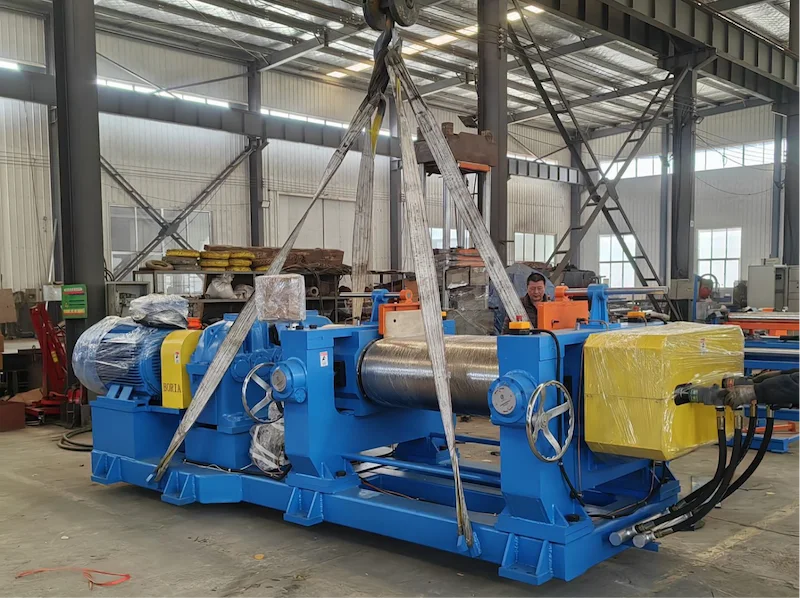
Banbury mixers are designed for durability, precision, and safety. Key structural features include:
High-Quality Rollers and Mixing Chamber
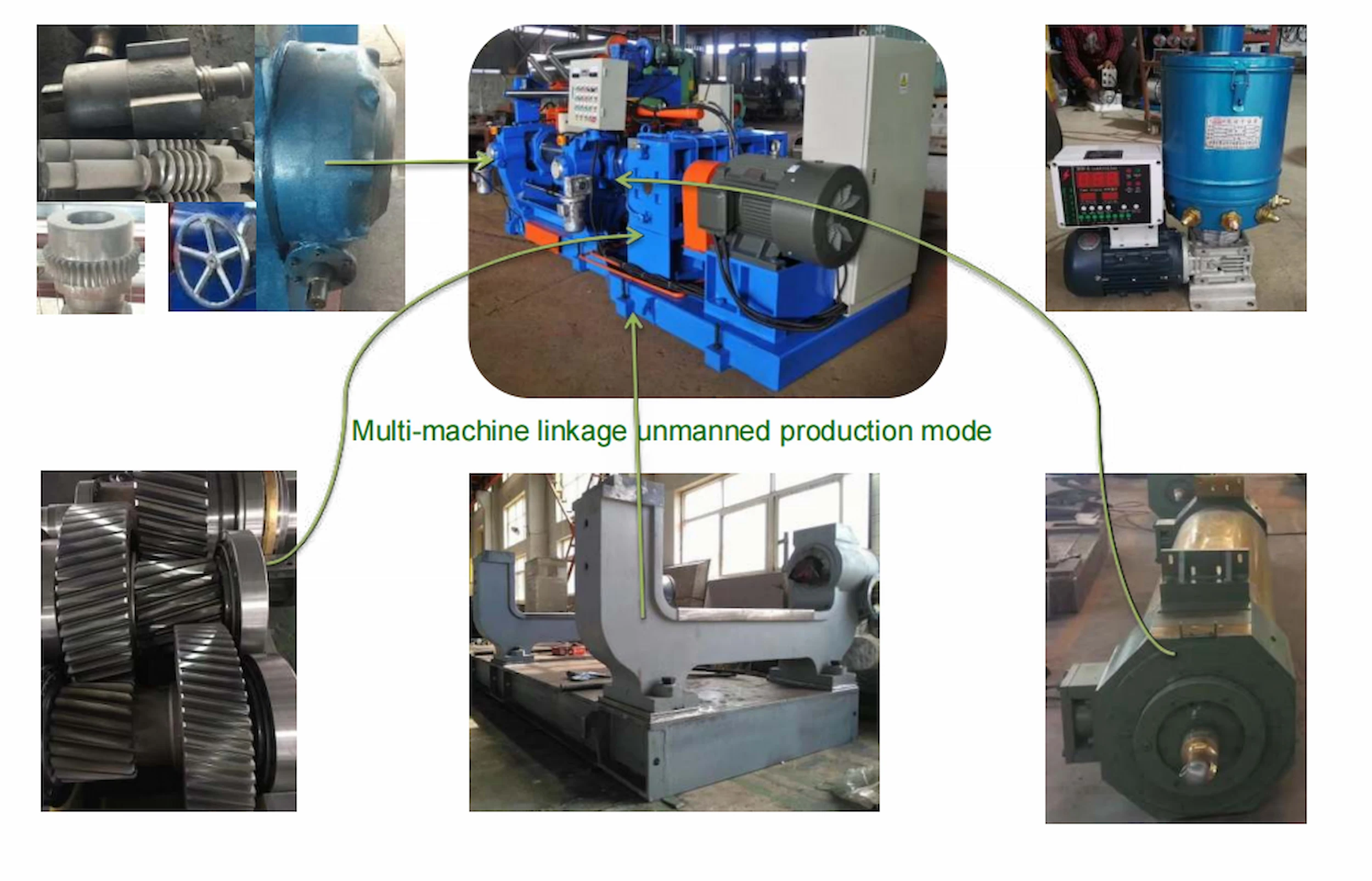
Rollers are made from chilled cast iron alloy with surface hardness exceeding 78HS, providing superior wear resistance and longevity compared to standard 72HS rollers.
Precision grinding of the rollers ensures a smooth working surface, uniform temperature distribution, and consistent mixing quality.
Motor and Drive System
Motors from reputable brands like OMRON or SIEMENS provide stable power output, low energy consumption, and minimal vibration.
The hardened-tooth speed reducers transmit power efficiently while reducing operational noise and enhancing safety.
Cooling and Lubrication Systems
Advanced cooling systems with rotary joints and spray pipes regulate temperature during operation, reducing energy consumption by up to 50%.
Automatic lubrication systems ensure bearings and bushings operate smoothly, reducing wear and maintenance needs.
Safety Features
Emergency brake mechanisms and overload protection devices safeguard operators and equipment.
The fully enclosed frame design minimizes the risk of accidental contact with moving parts, enhancing workplace safety.
Applications of Banbury Mixer
The versatility of Banbury mixers makes them suitable for numerous industries:
Rubber Industry: Ideal for processing natural and synthetic rubber, used in tires, footwear, hoses, and seals.
Plastic Industry: Efficiently mixes thermoplastics with fillers, colorants, and other performance additives.
Chemical Compounds: Disperses pigments, resins, and specialty chemicals for consistent compound quality.
Laboratory and Pilot Plants: Small-scale mixers allow for testing formulations and developing new materials.
Additionally, Banbury mixers are employed in recycling processes, such as blending reclaimed rubber with virgin materials to produce eco-friendly products. They also support innovation in R&D, enabling scientists and engineers to test new polymer blends under controlled conditions.
Advantages of Banbury Mixers
Uniform Mixing and Consistent Quality
Counter-rotating rotors ensure even dispersion of all components, preventing clumping or uneven distribution.
Efficiency in Time and Energy
Mechanical energy is converted into heat and shear within the material, reducing mixing times and energy consumption.
Versatility Across Materials
Adjustable rotor speeds, roll gaps, and chamber temperatures allow the mixer to handle a wide range of materials and formulations.
Durable Construction and Longevity
High-quality materials and precision engineering ensure long service life, even under continuous operation.
Safety and Ease of Maintenance
Emergency stops, overload protection, and automatic lubrication simplify operation while minimizing downtime.
Operational Tips and Maintenance
Regularly clean the mixing chamber and rollers to prevent residue buildup.
Monitor temperature and pressure to avoid material degradation or scorching.
Check lubrication systems and cooling circuits to maintain smooth operation.
Periodically calibrate roll gaps and rotor speeds to ensure consistent mixing quality.
Maintain a log of operations and maintenance history to streamline troubleshooting and improve efficiency.
Industry Examples and Case Studies
In practice, Banbury mixers have demonstrated their value across industries. For instance, a leading tire manufacturer in Germany uses Banbury mixers to blend natural rubber with carbon black and other additives, achieving consistent batch quality for high-performance tires. In Asia, a plastic product manufacturer integrates Banbury mixers into their production line to mix recycled and virgin plastic, producing eco-friendly products with minimal defects.
Similarly, in R&D laboratories, mini Banbury mixers allow engineers to experiment with new polymer formulations, adjusting rotor speed, temperature, and material ratios to optimize compound performance before scaling up production. These real-world applications underscore the importance of understanding the mixer’s working principle to achieve reliable results.
Future Trends in Banbury Mixer Technology
Modern Banbury mixers are evolving to incorporate automation, energy efficiency, and digital monitoring.
Automation: PLC controls and touchscreen interfaces allow operators to precisely set parameters for temperature, rotor speed, and mixing time.
Energy Efficiency: Improved insulation, optimized cooling circuits, and high-efficiency motors reduce power consumption.
Sustainability: Mixers designed for recycled or eco-friendly materials support green manufacturing practices.
Smart Monitoring: Sensors and IoT integration enable real-time monitoring, predictive maintenance, and remote troubleshooting.
These innovations not only enhance operational efficiency but also reduce environmental impact and improve workplace safety.
The Banbury mixer is more than just a piece of machinery; it is a critical component in modern rubber, plastic, and chemical manufacturing. Its working principle—relying on mechanical shear, controlled heat, and precise material flow—ensures the production of homogeneous, high-quality compounds. With robust construction, advanced safety features, and adaptability across industries, Banbury mixers remain indispensable for manufacturers seeking efficiency, reliability, and consistent product performance.
Understanding the intricacies of this machine allows businesses to optimize operations, reduce waste, and achieve better control over the final product. As technology continues to evolve, the Banbury mixer will maintain its position as a vital tool in industrial mixing, supporting both large-scale production and innovative R&D initiatives.