Extrusion production lines are important production equipment widely used in industries such as plastics, rubber, food, and chemicals. They are mainly used to melt and plasticize raw materials through heating, pressurization, and shearing, and continuously extrude them through molds to form products with certain shapes and sizes. A complete extrusion production line is usually composed of multiple key components and auxiliary equipment, which work together to ensure the stability of the production process and the reliability of product quality.
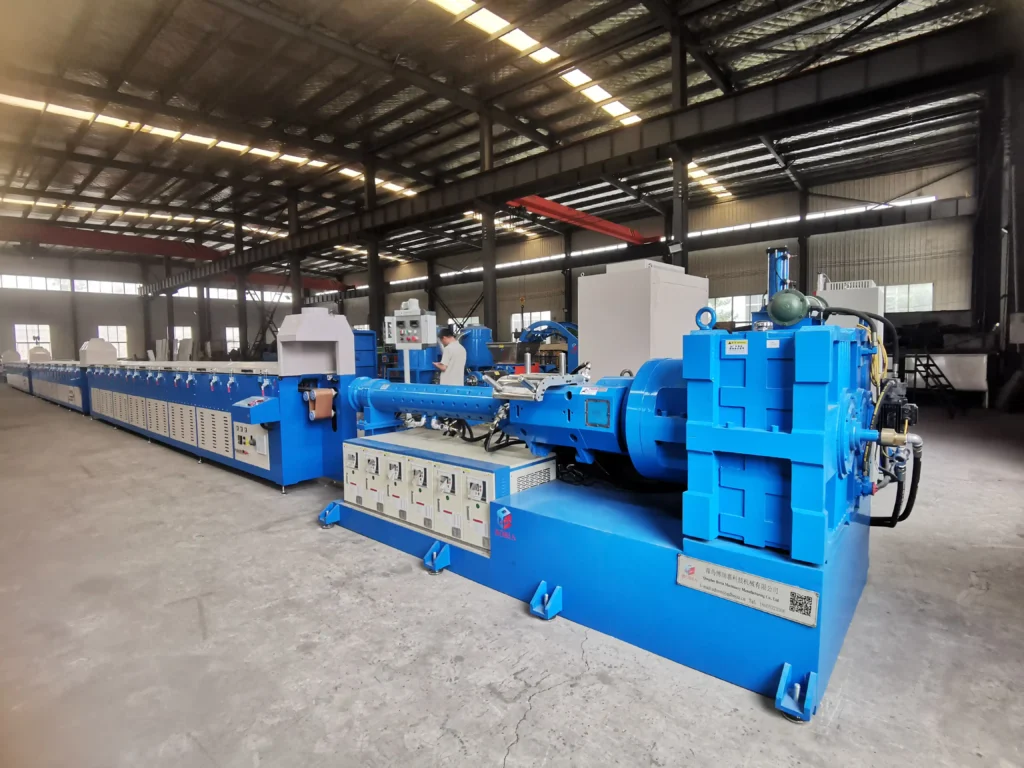
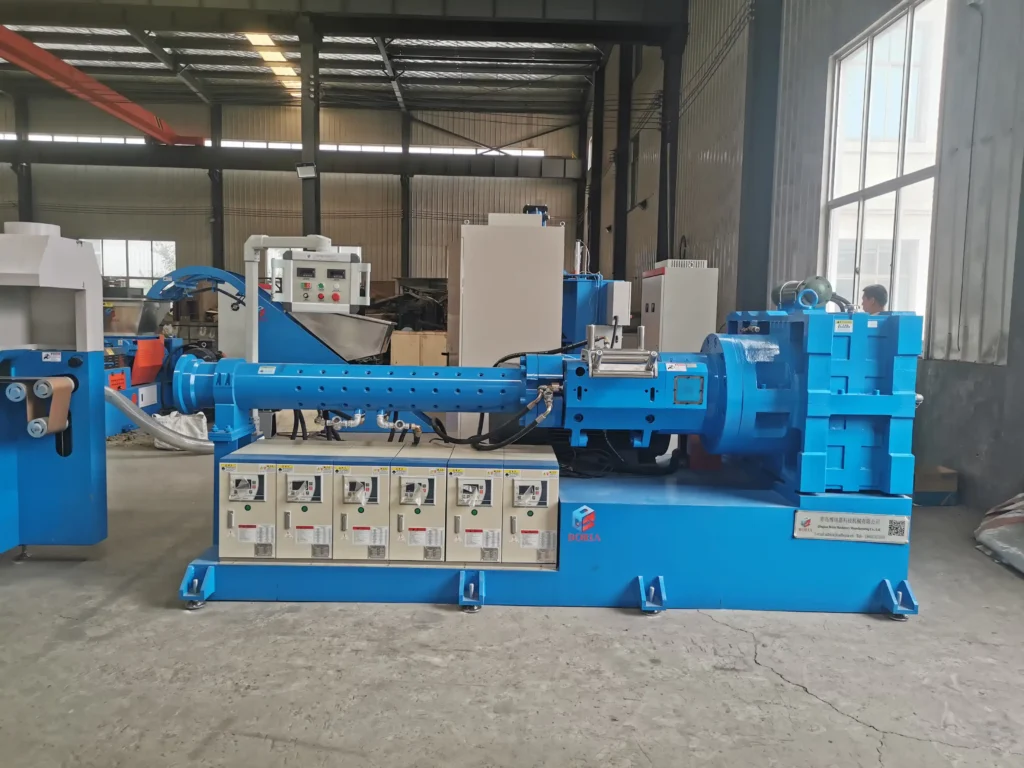
First of all, the core equipment of the extrusion production line is the extruder. The extruder is mainly composed of a drive system, a screw, a barrel and a heating and cooling system. Among them, the structure of the screw and the length-to-diameter ratio have a significant impact on the plasticizing effect of the material and the production capacity. Depending on different processing requirements, single-screw extruders or twin-screw extruders can be selected. The latter has more advantages in terms of mixing performance and exhaust capacity.
Secondly, the mold is the key component that determines the final shape of the product. The design of the mold needs to be precisely processed according to the geometric shape, dimensional accuracy and surface quality requirements of the product. During the extrusion process, the molten material undergoes certain pressure and rheological changes as it passes through the die mouth. Therefore, the flow channel design of the die must be reasonable to ensure uniform material flow and avoid defects such as weld marks and deformation.
In addition to the main machine and molds, the extrusion production line also includes a series of auxiliary equipment. The cooling and shaping device is one of them, mainly used for rapid cooling and shaping of high-temperature products just extruded, preventing the products from deforming under their own weight or external force. Common cooling methods include water tank cooling, spray cooling and vacuum setting, etc.
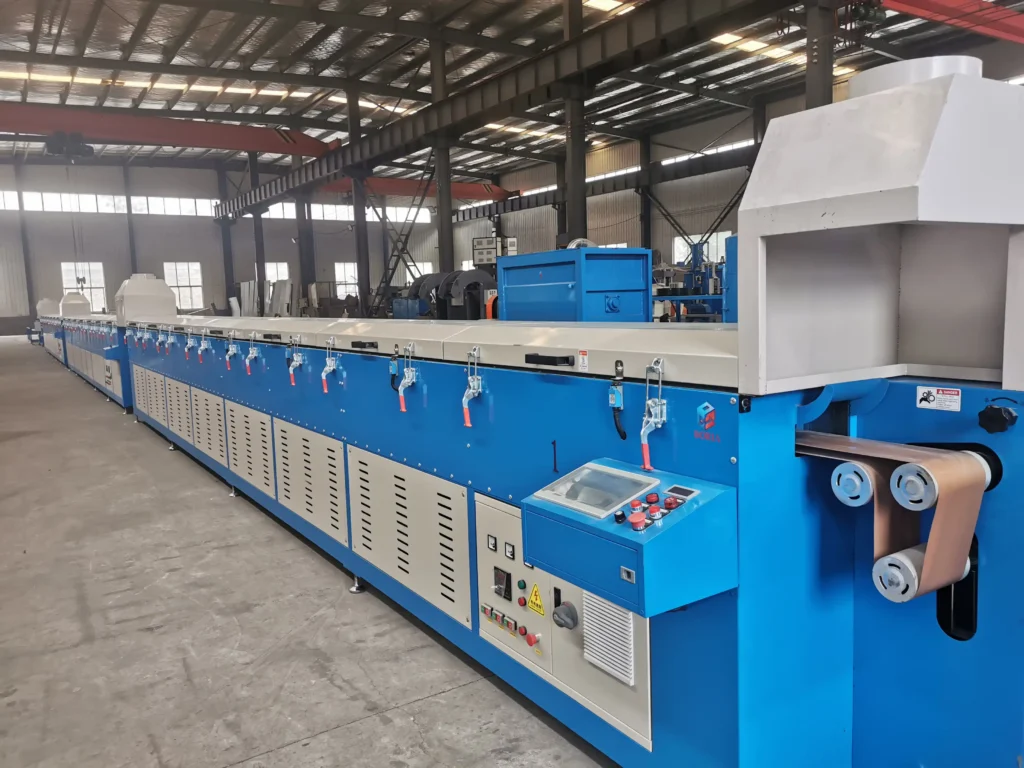
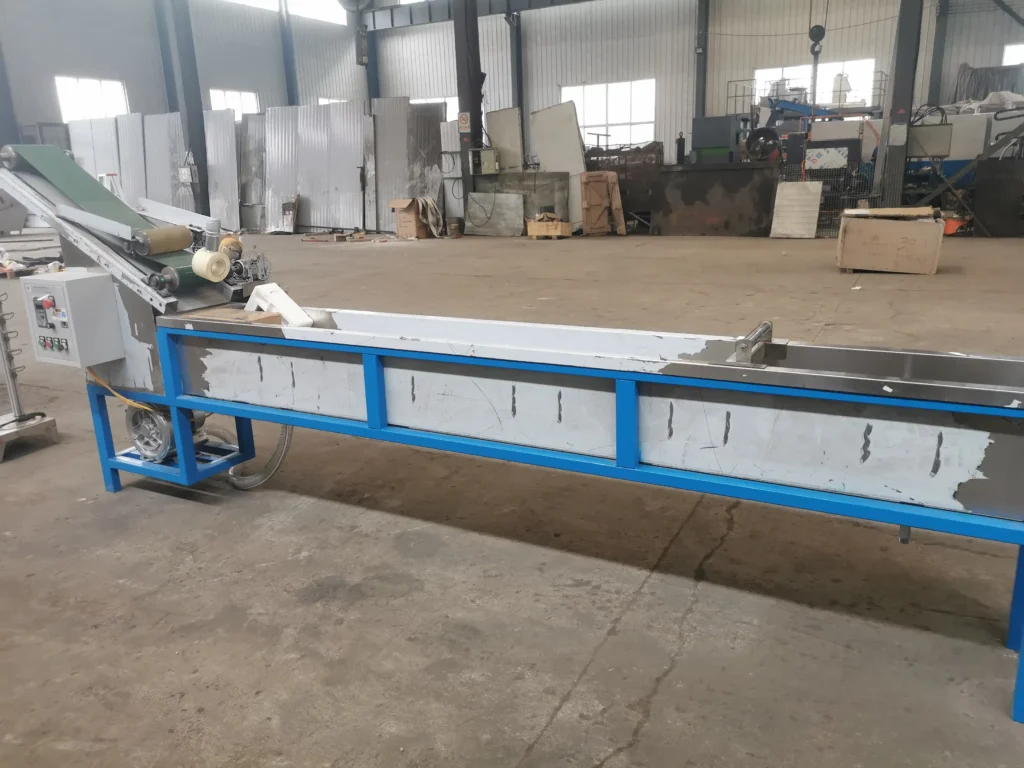
The traction device is also an indispensable part. Its function is to pull the continuously extruded products out of the cooling device at a stable speed and maintain uniform tension of the products during the cooling process. The control of traction speed has a direct impact on the dimensional accuracy and surface quality of the product.
The cutting device is used to cut the continuously extruded products to the set length. Depending on the product type and production requirements, manual cutting or automatic fixed-length cutting equipment can be selected. For some special products, such as pipes or profiles, automatic stacking or winding devices may also be equipped to enhance production efficiency and the level of automation.
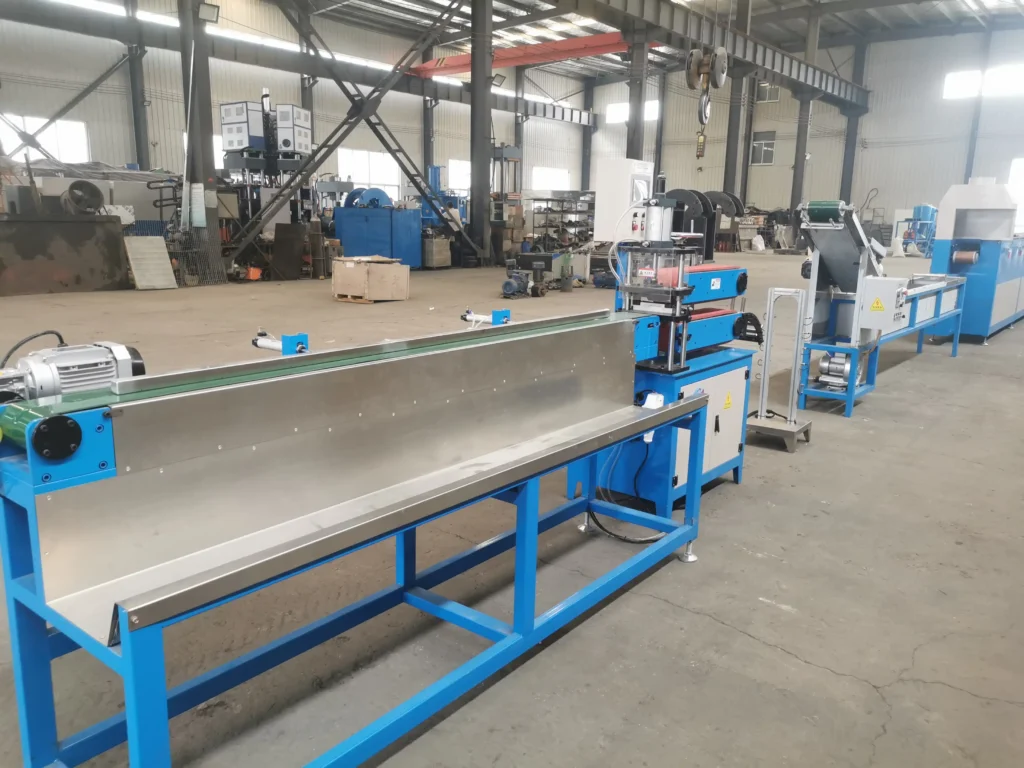
In addition, the control system plays the role of the “brain” throughout the entire extrusion production line. Modern extrusion production lines generally adopt PLC or computer control systems to achieve precise control and real-time monitoring of parameters such as temperature, pressure, rotational speed, and traction speed, thereby ensuring the stability of the production process and the consistency of product quality.
In conclusion, the configuration and composition of an extrusion production line is a systematic project, involving the coordinated operation of multiple devices. In practical applications, each part of the equipment should be reasonably selected and configured based on specific processing materials, product specifications and production efficiency requirements, so as to achieve efficient, stable and high-quality continuous production.