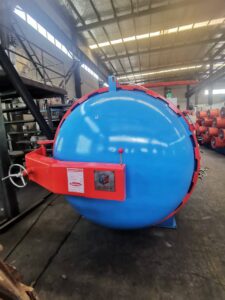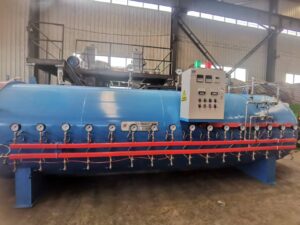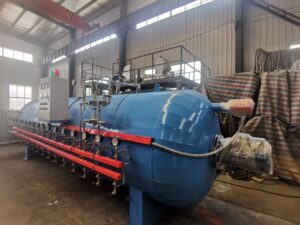
Tyre Curing Chamber
The tire Curing Chamber is a key equipment specifically used in the tire manufacturing process. Its main function is to heat and pressurize uncured tires, thereby achieving the vulcanization reaction of rubber. This process is crucial for ensuring the performance, durability and safety of the tires. Tire vulcanizing tanks are usually made of high-strength steel, capable of withstanding high-temperature and high-pressure working environments. Meanwhile, the internal design is precise to ensure the uniform distribution of temperature and pressure during the vulcanization process.
In tire production, the function of the vulcanizing chamber is to convert raw rubber into vulcanized rubber with elasticity and mechanical strength through chemical reactions. This process requires precise control of parameters such as time, temperature and pressure to ensure that the quality of the final product meets the standards. For instance, in the production of passenger car tires, the vulcanizing tank needs to maintain a temperature of approximately 150 degrees Celsius and a pressure of about 1.5 megapascals for about 20 minutes to 1 hour, with the specific duration depending on the tire specifications and material properties.
In addition, modern tire vulcanizing chambers are equipped with advanced automated control systems that can monitor and adjust various parameters during the vulcanization process in real time, thereby enhancing production efficiency and product quality. These systems not only reduce the errors caused by human operation, but also make large-scale industrial production possible. With the advancement of technology, some new types of vulcanizing tanks have also introduced energy-saving designs, such as heat recovery systems, which can reduce energy consumption while minimizing the impact on the environment.
The application scope of tire vulcanizing chambers is very wide. Besides traditional automotive tires, they are also used in the production of various types of rubber products such as motorcycle tires, engineering vehicle tires and aviation tires. Due to their different uses, each type of tire has different requirements for the vulcanization process. Therefore, the design and configuration of the vulcanization tank need to be customized and adjusted according to specific needs.
In conclusion, as one of the core equipment in tire manufacturing, the performance of the tire vulcanizing chamber directly affects the quality of the final product. Through continuous optimization of the vulcanization process and technological upgrading, manufacturers can better meet the growing market demand for high-performance tires.