
The rubber sheet cooling line is an indispensable key equipment in the production process of rubber products. It is mainly used to quickly cool down the rubber sheets after hot processing such as mixing and plasticizing. Simply put, it is like a “cooling artifact” for rubber sheets, which can quickly cool down the rubber sheets that have just come out of the high-temperature processing link.
In the entire rubber product production process, the rubber sheet cooling line is in a key position that connects the upper and lower parts. Before it, the rubber needs to be mixed and plasticized by equipment such as internal mixers and open mixers. These processes will increase the temperature of the rubber and the molecular structure will be in an active state. If it is not cooled in time, the performance of the rubber will be affected, such as scorching, which will cause the physical properties of the rubber products to decrease and fail to meet the requirements of subsequent processing and use. The cooling line can quickly reduce the temperature of the rubber sheet, stabilize its molecular structure, and prepare for subsequent molding, vulcanization and other processing procedures. This is like when cooking, let the fried dishes cool first, so that the next step of plating and decoration can be better carried out. The importance of the cooling line for the subsequent processing of rubber sheets is self-evident.
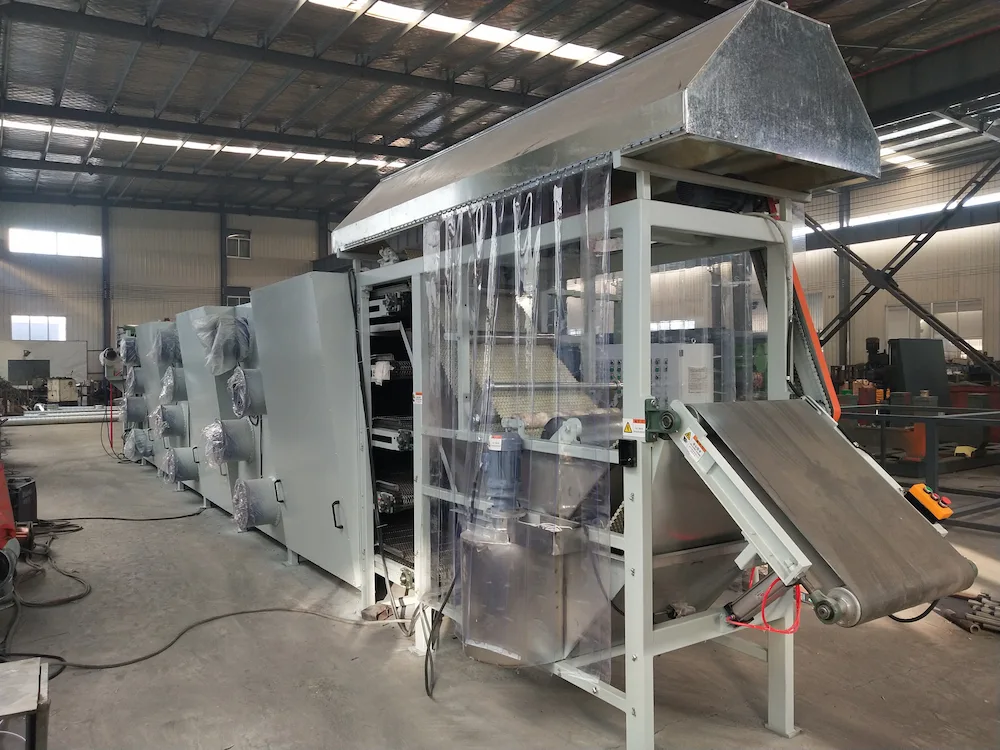
Core Structure and Working Principle of Rubber Sheet Cooling Line
(I) The main components are revealed
- Mixer: It usually looks like a large metal container with a stirring blade, which is generally spiral or paddle-shaped. Its main function is to fully mix the rubber sheet and the release agent. During the mixing process, the blade rotates at high speed, pushing the rubber sheet and the release agent to roll and collide in the container, so that the release agent is evenly attached to the surface of the rubber sheet. This is like making a salad, mixing the vegetables and sauce thoroughly to ensure that each piece of vegetable is covered with delicious sauce. The function of the mixer is to evenly coat the rubber sheet with the release agent to prevent the rubber sheet from sticking together during subsequent processing.
- Cooling water tank: It is generally a rectangular or U-shaped water tank made of corrosion-resistant materials such as stainless steel. The inside of the water tank is filled with cooling water, and the rubber sheet will slowly pass through the cooling water driven by the conveyor in the water tank. The water tank is like a large “cold water bathtub” in which the rubber sheet “bathes” and transfers its own heat to the cooling water through heat transfer, thereby achieving rapid cooling. For example, Kunshan Juwei Engineering Plastics Co., Ltd. has obtained a patent for a “cooling water tank”. The water tank and the overflow tank are connected through an overflow hole, which can achieve continuous cooling of the water and provide a more stable cooling environment for the rubber sheet.
- Receiving device: It is usually composed of a belt conveyor or a chain conveyor, and its shape is similar to a flat conveying platform. Its task is to smoothly receive the rubber sheet coming out of the tablet press and convey it to the subsequent cooling equipment. Just like the first runner in a relay race, it accurately takes over the “baton” of the rubber sheet and quickly passes it to the next link.
- Lifting device: Most of them are chain hoists or spiral hoists, and their appearance is a vertical lifting structure with chains or spiral blades. When the rubber sheet needs to be lifted from a lower position to a higher position for subsequent processing, the lifting device comes into play. It slowly lifts the rubber sheet, just like an elevator takes passengers to different floors, and sends the rubber sheet to the appropriate height for subsequent cooling, cutting and other processes.
- Cooling device: In addition to the cooling water tank mentioned above, there are also air cooling devices. The air cooling device usually consists of a fan and an air duct. The fan generates a strong airflow and blows the cold air to the rubber sheet through the air duct. In the hot summer, we will turn on the fan to cool down. The air cooling device is to the rubber sheet just like the fan is to us. The heat on the surface of the rubber sheet is taken away by the flowing air to achieve the cooling effect.
- Cutting device: It is generally composed of a blade and a drive mechanism. The blade is usually made of sharp alloy steel and has a circular or serrated shape. The drive mechanism provides power so that the blade can cut the rubber sheet quickly and accurately. When the rubber sheet is cooled to the appropriate temperature and hardness, the cutting device will cut the rubber sheet into the required specifications according to the preset length or weight, just like cutting cloth with scissors, cutting the rubber sheet into the appropriate size.
- Swinging device: It is mainly composed of a mechanical arm or a swinging mechanism, which can neatly place and stack the cut rubber sheets according to a certain rule. It is like a hardworking “organizer”, arranging the cut rubber sheets one by one in order to prepare for subsequent packaging and storage.
(II) Cooperative cooling process
When the internal mixer fully mixes various rubber raw materials and compounding agents and discharges the high-temperature rubber, the sheet press first presses the rubber into a rubber sheet of a certain thickness and width. At this time, the temperature of the rubber sheet is high and the molecular structure is not stable, so it needs to be cooled.
The receiving device quickly and steadily receives the rubber sheet coming out of the sheet press and transports it to the mixer. In the mixer, the rubber sheet and the release agent are fully mixed under the strong stirring of the stirring blades, and each rubber sheet is evenly wrapped with the release agent, which lays the foundation for preventing adhesion in the future.
The rubber sheet wrapped with the release agent then enters the cooling water tank and slowly travels in the cooling water driven by the conveyor. The heat of the rubber sheet is continuously transferred to the cooling water, and its own temperature drops rapidly. If the cooling water tank adopts a design similar to Kunshan Juwei with an overflow tank and a circulating cooling system, the cooling water can continue to maintain a low temperature, providing a more efficient cooling environment for the rubber sheet.
The rubber sheet coming out of the cooling water tank may still have a certain amount of moisture, although the temperature has dropped. At this time, the air cooling device starts to work, and the strong cold air blown out by the fan dries the moisture on the surface of the rubber sheet, further reducing the temperature of the rubber sheet and making it reach the ideal cooling state.
The cooled rubber sheet is transported to the cutting device. The cutting device accurately cuts the rubber sheet into the specified size according to the preset parameters, such as length, weight, etc. For example, when producing rubber sheets for tires, the rubber sheets will be cut into appropriate lengths and widths according to the specifications of the tires.
The cut rubber sheets finally come to the swinging device. The swinging device neatly arranges and stacks the rubber sheets one by one according to the set program. In this way, after a series of collaborative work of the cooling line, the originally high-temperature and soft rubber sheets become rubber sheet products with uniform specifications, easy to store and transport, waiting to enter the next production link.
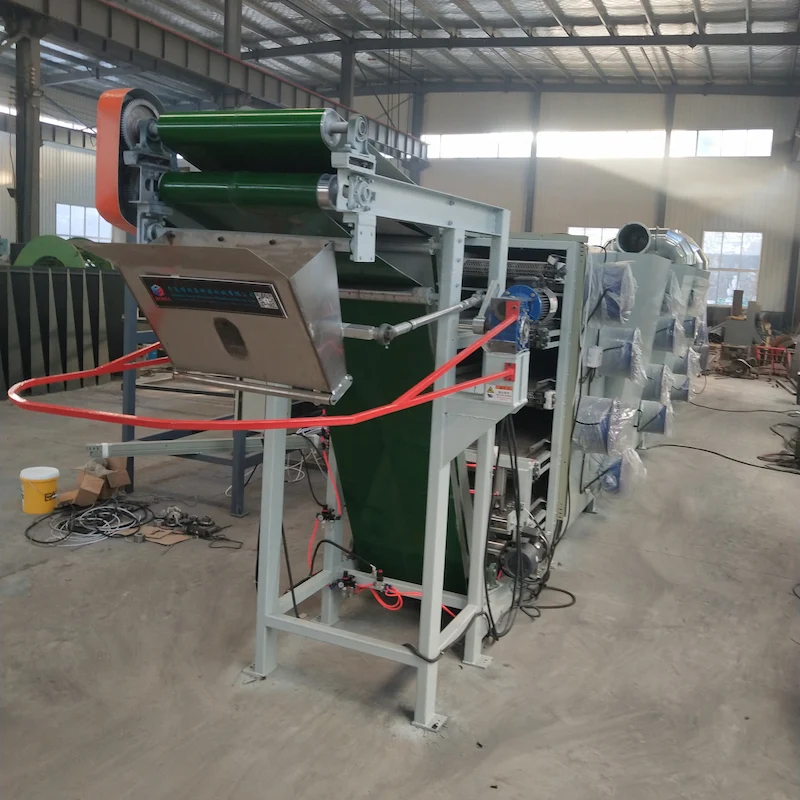
Key Advantages and Application areas of Rubber Sheet Cooling Line
(I) A powerful assistant for efficient production
In the production of modern rubber products, time is money and efficiency is life. The rubber sheet cooling line has become a key factor in improving production efficiency with its excellent design and efficient operation.
From the perspective of improving production efficiency, the traditional rubber sheet cooling method may require manual transportation of the rubber sheet to the cooling area, and then wait for it to cool naturally. This process is not only time-consuming, but also easily affected by environmental factors, resulting in unstable cooling time. The rubber sheet cooling line realizes automated continuous production. From the collection, mixing, cooling to cutting and swinging of rubber sheets, each link is closely connected, like an efficient production line, which greatly shortens the production cycle. For example, in some large tire manufacturers, after using the rubber sheet cooling line, the number of rubber sheets that can be processed per hour has increased several times compared with the traditional method, which has significantly improved the company’s production capacity.
In terms of ensuring product quality, the rubber sheet cooling line also plays an important role. Accurate temperature control is the key to ensuring the stable performance of rubber sheets. The cooling line can accurately control the temperature of the cooling water and the intensity of the air cooling within a suitable range through an advanced temperature control system, so that the temperature of the rubber sheet drops evenly during the cooling process, avoiding changes in the internal structure of the rubber sheet caused by uneven temperature, thereby ensuring the stability of the physical and chemical properties of the rubber sheet and improving the qualified rate of the product. For example, when producing rubber seals, a stable cooling process can effectively ensure the dimensional accuracy and sealing performance of rubber seals, reducing the scrap rate caused by quality problems.
Reducing labor costs is also a major advantage of the rubber sheet cooling line. In the traditional cooling method, a large number of people are required to participate in the handling, cooling monitoring and sorting of rubber sheets. The rubber sheet cooling line has a high degree of automation, and only a few operators are required to monitor and maintain the equipment, which greatly reduces the number of workers. Taking a medium-sized rubber product factory as an example, after adopting the rubber sheet cooling line, the labor cost was reduced by about 30%, which saved the company a lot of labor cost expenditure and improved the company’s economic benefits.
(II) Widely used industrial “all-rounder”
The rubber sheet cooling line has its unique advantages and is widely used in many industries, becoming an “all-rounder” in the industrial field.
In the automotive industry, rubber products are an indispensable part of automobiles. From tires to seals, shock absorbers, etc., the quality of each rubber component is related to the performance and safety of the car. The rubber sheet cooling line plays a key role in the production of automotive rubber products. For example, in the tire production process, the rubber sheet can ensure its dimensional accuracy and physical properties after rapid cooling through the cooling line, so that the tire can still maintain good performance under high-speed driving and complex road conditions. Like the seals of automobile engines, the seals made of rubber sheets cooled by the cooling line have better oil resistance and high temperature resistance, which can effectively prevent engine oil and air leakage and ensure the normal operation of the engine.
The construction industry is also an important application field of rubber sheet cooling lines. In construction, rubber products are mainly used for waterproofing, sealing and shock absorption. Take the rubber water stop as an example, it is a key material for waterproofing projects such as basements and tunnels. The rubber sheet cooling line can ensure that the produced rubber water stop has good elasticity and flexibility, so that it can still effectively play a waterproof and sealing role when the building structure is deformed. There are also rubber shock-absorbing pads, which are used for shock absorption of the foundation and equipment of buildings. The shock-absorbing pads made of rubber sheets cooled by the cooling line can better absorb vibration and impact, and protect buildings and equipment from vibration.
The medical industry has extremely high requirements for the quality and safety of rubber products. The rubber sheet cooling line also plays an important role in the production of medical rubber products. For example, medical rubber gloves, catheters and other products need to have good flexibility, corrosion resistance and biocompatibility. The cooling line can ensure that the rubber sheet does not produce impurities and deformation during the cooling process, thereby ensuring that the manufactured medical rubber products meet strict quality standards. During the production process of medical rubber gloves, the rubber sheet cooled by the cooling line can make the gloves feel softer and more comfortable to wear, while also improving the durability and safety of the gloves.
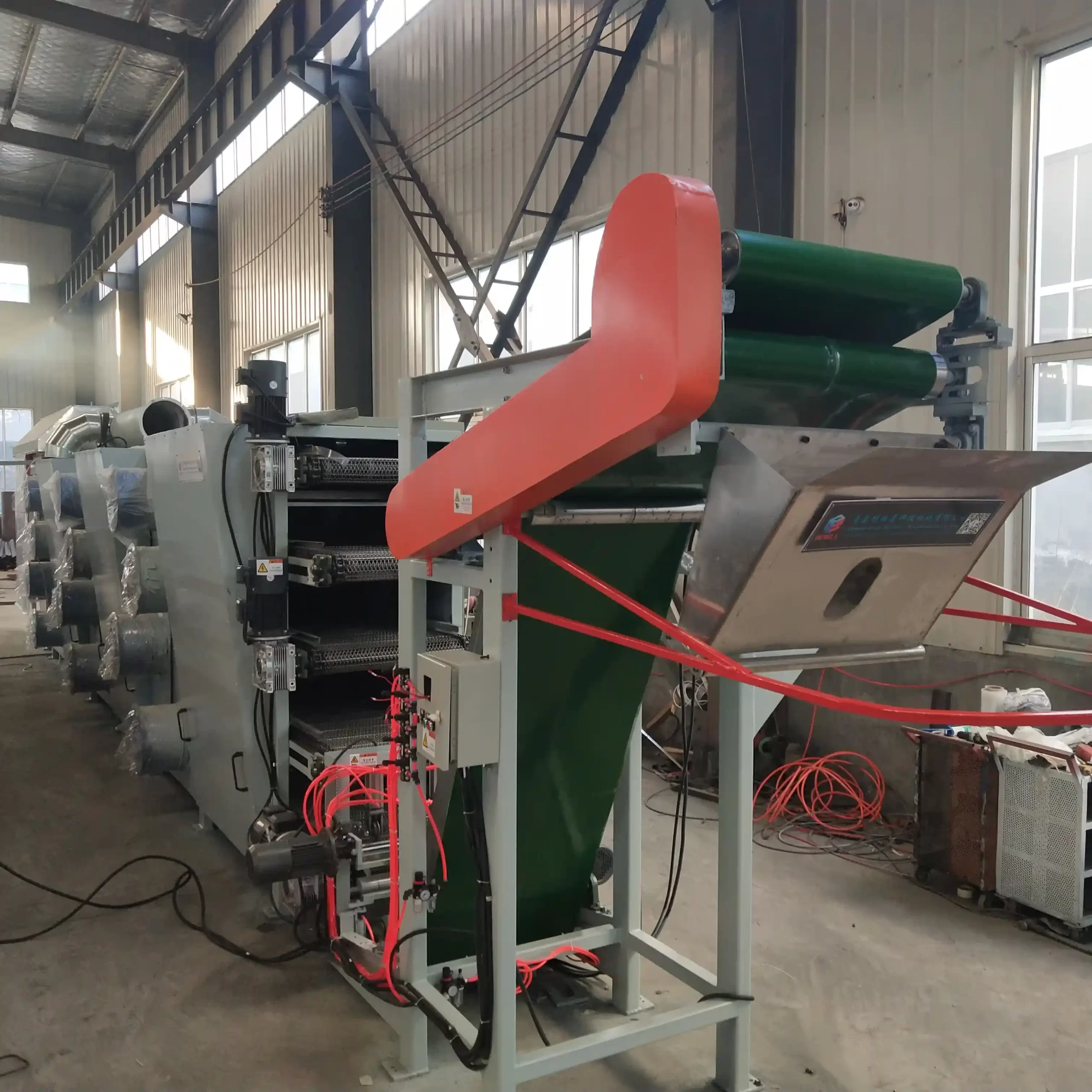
Technical Difficulties and Countermeasures
(I) Analysis of Common Challenges
In the actual operation of the rubber sheet cooling line, a series of technical difficulties will be faced, among which the swing and cutting deviation problems are more prominent.
From the perspective of swing deviation, in the automatic swing device, there is a “non-linear” correspondence between the “left and right” movement (position and speed) of the swing hopper and the movement of the end of the film. This is like when a person is running, the rhythm and speed of the steps are not completely synchronized with the movement state of the object in his hand. At high speed, this asynchrony will be more obvious. When the rubber sheet cooling line runs at high speed, the movement of the swing hopper cannot accurately match the movement of the end of the film, resulting in the “left and right placement deviation” of the film. For example, in some large rubber product production workshops, due to the high production speed, the problem of swing deviation often occurs, making the stacked rubber sheets uneven, affecting the subsequent packaging and transportation.
In addition, the film in the swing hopper and the lower swing of the automatic swing device has “small torsional vibration around the Z axis”, which will be amplified at the end. This is similar to a rotating gyroscope, which will produce a small swing during the rotation process, and this swing will be amplified when it is transmitted to the end. This torsional vibration is an important cause of the “front and back placement deviation” of the film. Once the front and back placement deviation occurs, the rubber sheets will be misaligned when stacked, which will not only affect the appearance, but also may cause quality problems in subsequent processing.
Cutting deviation should not be ignored either. The accuracy of the cutting device directly affects the size specifications of the rubber sheet. If the cutting device’s tool wears unevenly or is disturbed by external forces during the cutting process, the length or width of the cut rubber sheet will deviate. When producing rubber sealing strips, the dimensional accuracy of the rubber sheet is very high. If the cutting deviation is too large, the sealing strip cannot be accurately installed, affecting the sealing effect.
(II) Demonstration of innovative solutions
In order to solve these technical problems, engineers and technicians in the industry have proposed a series of effective solutions through continuous innovation and practice.
In solving the problem of swing deviation, optimizing the design of the motion mechanism is the key. For example, adding a correction device to the swing sleeve is like installing a precise steering wheel on a car, which can adjust the position of the swing in real time. This correction device can use high-precision sensors to monitor the motion state of the swing hopper and the film in real time. Once a deviation is found, the motion parameters of the swing hopper are immediately adjusted through the control system to accurately match the motion of the film.
At the same time, the existing open-loop control system is upgraded and transformed by intelligent algorithms such as self-tuning PID and fuzzy control. The self-tuning PID algorithm can automatically adjust the control parameters according to the operating state of the system, so that the system always maintains the best operating state. The fuzzy control algorithm can handle some complex problems that are difficult to describe with precise mathematical models. It can intelligently control the swing process based on experience and rules. Through the application of these intelligent algorithms, the accuracy of the swing has been greatly improved, the stacking of stacked sheets can be neatly arranged, and the front, back, left and right deviations can be controlled within a very small range, such as ±2mm.
For the problem of cutting deviation, the cutting device must first be regularly maintained and serviced, and worn tools must be replaced in time to ensure the sharpness and accuracy of the tools. At the same time, advanced laser measurement technology is introduced to accurately measure the position and size of the rubber sheet before cutting, and then the parameters of the cutting device are adjusted according to the measurement results to achieve precise cutting. The cutting process is linked to the operation of the entire cooling line by using an automated control system, and the timing and strength of cutting are adjusted in real time according to the production speed and position of the rubber sheet, further improving the accuracy and stability of cutting.
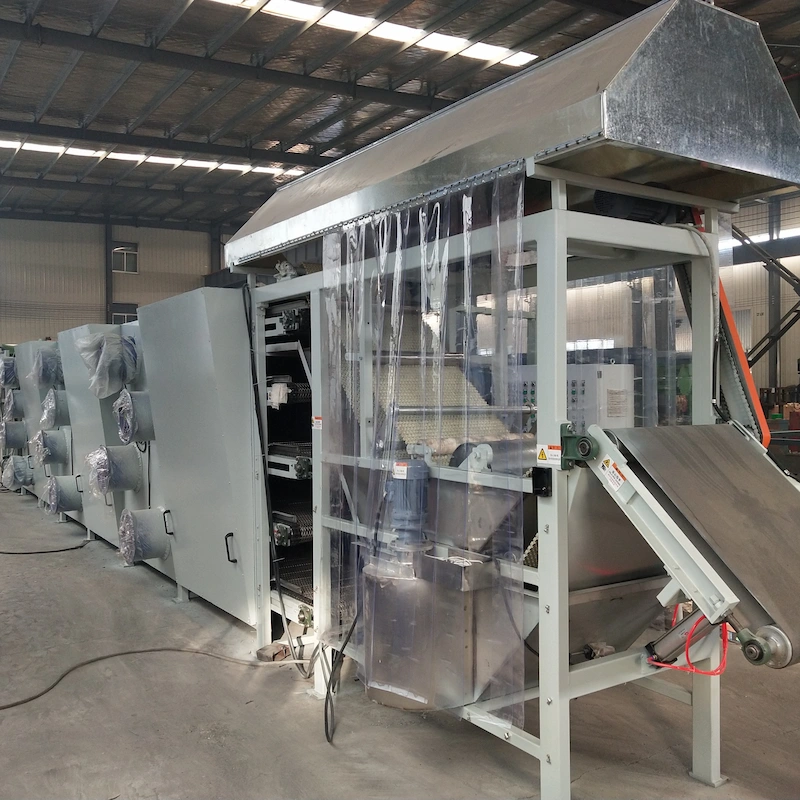
Future Trends and Outlook
(I) Direction of Technological Innovation
Intelligent and automated upgrades: With the continuous advancement of science and technology, the application of intelligent and automated technologies in rubber sheet cooling lines will be more in-depth. In the future, rubber sheet cooling lines are expected to be equipped with advanced sensors and intelligent control systems, which can monitor the temperature, thickness, running speed and other parameters of rubber sheets in real time, and automatically adjust the running status of the cooling line according to these parameters to achieve precise control. For example, the temperature of the rubber sheet is monitored in real time by sensors. When the temperature is too high, the system automatically increases the cooling water volume or increases the air cooling intensity; when the temperature reaches the set range, the cooling parameters are automatically adjusted to ensure that the rubber sheet is always in the best cooling state. It can also realize automatic diagnosis and early warning of faults. When the equipment fails, the system can quickly locate the fault point and issue an alarm in time to notify the maintenance personnel to repair it, which greatly improves the reliability and production efficiency of the equipment.
Energy-saving and environmental protection improvements: Under the background of global advocacy of energy conservation and environmental protection, rubber sheet cooling lines will also develop in this direction. On the one hand, by optimizing the design of the cooling system, energy utilization efficiency can be improved and energy consumption can be reduced. The use of a new cooling medium with a larger specific heat capacity can more effectively absorb the heat of the rubber sheet, thereby reducing the energy required for cooling. On the other hand, strengthen the recycling of cooling water and reduce the waste of water resources. By installing efficient water treatment equipment, the cooled water is purified so that it can be used again in the cooling process to achieve the recycling of water resources. Waste heat recovery technology can also be used to recycle the waste heat generated during the cooling process of the rubber sheet for other production links or life areas, further improving the comprehensive utilization efficiency of energy.
Application of new materials: The research and development and application of new materials will bring new changes to the rubber sheet cooling line. In the future, new materials with better heat dissipation performance and lower friction coefficient may appear for the manufacture of key components of the cooling line. For example, the use of new heat dissipation materials to make the inner wall of the cooling water tank can improve the efficiency of heat transfer and make the rubber sheet cool faster. The use of low friction coefficient materials to make the conveyor belt of the conveying device can reduce the friction between the rubber sheet and the conveyor belt, reduce energy consumption, and also reduce the wear on the surface of the rubber sheet and improve product quality. In addition, new isolation agent materials may be developed, which have better isolation effects and are pollution-free to the environment, further improving the performance and environmental protection level of the rubber sheet cooling line.
(II) Industry development opportunities
Promoted by the development of emerging industries: With the rapid development of emerging industries such as new energy vehicles, aerospace, and high-end equipment manufacturing, the demand for high-performance rubber products is growing. In the field of new energy vehicles, rubber products such as battery seals and shock absorbers need to have higher temperature resistance, corrosion resistance, and sealing to adapt to complex working environments. The aerospace field has extremely high requirements for rubber products such as lightweight, high strength, and high temperature resistance. The development of these emerging industries provides a broad market space for rubber sheet cooling lines. Rubber sheet cooling line manufacturers can seize the opportunity, increase R&D investment, and develop rubber sheet cooling technology and equipment that are more suitable for the needs of emerging industries, improve product performance and quality, and meet the market demand for high-performance rubber products.
Opportunities for market demand growth: The development of the global economy and the improvement of people’s living standards have driven the continued growth of market demand for rubber products. In traditional industries such as construction, medical care, and electronics, the demand for rubber products remains stable. In the construction industry, the market demand for products such as rubber waterstops and sealing strips has increased with the continuous advancement of infrastructure construction. The demand for medical rubber gloves, catheters, and other products in the medical industry is also steadily increasing. As people pursue the quality of life, some emerging consumer fields have also generated new demands for rubber products. Rubber seals in smart homes, rubber shock pads in fitness equipment, etc. As a key equipment for the production of rubber products, the rubber sheet cooling line will usher in more development opportunities as market demand grows. Enterprises can meet the growing market demand and achieve their own rapid development by expanding production scale, improving production efficiency, and optimizing product structure.
Why Choose Rubber Sheet Cooling Line
The rubber sheet cooling line, a device that plays a key role in the production of rubber products, has become an important cornerstone for ensuring the quality and production efficiency of rubber products with its indispensable position. From its core components, to its exquisite working principles, to its wide application in many industries, and its constantly innovative technological trends, it shows its unique value in modern industrial production.
In the future, with the continuous advancement of science and technology and the continuous evolution of market demand, the rubber sheet cooling line will surely usher in more technological breakthroughs and development opportunities. It will stride forward in the direction of intelligence, automation, energy saving and environmental protection, and inject a steady stream of power into the high-quality development of the rubber products industry. Whether it is the rise of emerging industries or the growth of traditional market demand, it will provide broad space for the development of rubber sheet cooling lines.
Paying attention to the development of rubber sheet cooling lines is to pay attention to the future of the rubber products industry. It is not only related to the production efficiency and product quality of a single enterprise, but also affects the coordinated development and competitiveness of the entire industrial chain. Let us look forward to the rubber sheet cooling line creating more brilliance in the future and contributing more to the advancement of industrial production.