
In the vast field of industrial production, Silicone Rubber EPDM PVC Hose Extruding Line may be a slightly unfamiliar professional term to many people, but it plays a pivotal role in the pipe manufacturing industry. Simply put, it is a hose extrusion production line that is specially used to produce hoses of different materials such as silicone rubber (Silicone Rubber), EPDM and polyvinyl chloride (PVC). These hoses are widely used in many fields such as automobile manufacturing, construction engineering, electronic equipment, and medical industry to meet the needs of various liquids and gases as well as sealing and protection in special environments.
Just like the cooling system of a car requires a reliable PVC hose to transport coolant to ensure that the engine runs at a suitable temperature; the water supply and drainage system in the building, silicone rubber and EPDM hoses, with their excellent corrosion resistance and flexibility, ensure unimpeded water flow; in medical equipment, silicone rubber hoses with extremely high requirements for hygiene and safety are used in key links such as liquid medicine delivery and respiratory assistance. The realization of all these functions is inseparable from the key equipment Silicone Rubber EPDM PVC Hose Extruding Line, which is like a behind-the-scenes hero, silently promoting the normal operation of various industries. Next, let us take a deeper look at its working principle, structural composition and unique advantages.
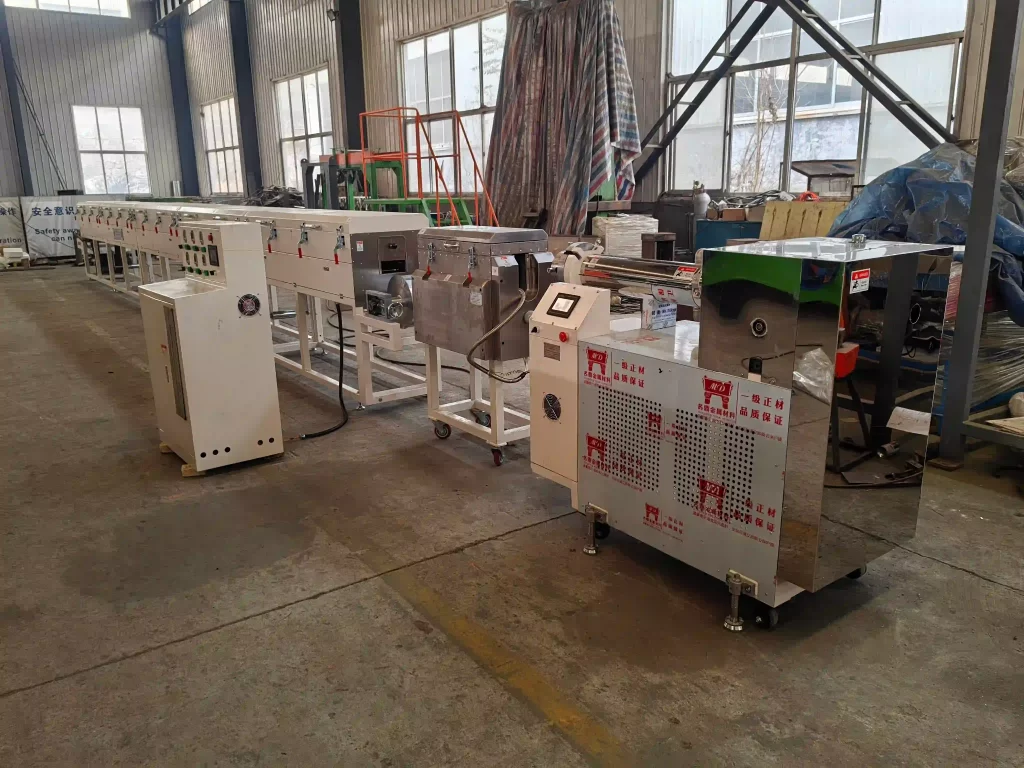
Silicone Rubber EPDM PVC Hose Extruding Line Working Principle
The working principle of Silicone Rubber EPDM PVC Hose Extruding Line is exquisite and complex, like an orderly industrial symphony, each link is closely linked, and together play the movement of high-quality hose production. Next, let’s go deep into each production link and explore how it transforms raw materials into various practical hoses.
Raw Material Preparation
The first step in production is to carefully prepare the raw materials. Silicone rubber, EPDM rubber and polyvinyl chloride all enter the production line in different forms, like uncut jade waiting to be carved. These raw rubbers are usually hard and lack the good plasticity required for processing. In order to proceed smoothly with subsequent processing, they need to be plasticized. Take silicone rubber as an example. Through the mechanical extrusion and friction of the plasticizer, its long-chain molecules are degraded and shortened, changing from the original highly elastic state to a plastic state, just like kneading a hard dough until it is soft and plastic, which is convenient for the subsequent addition of various compounding agents.
Compounding agents play a key role in this process. They are the secret weapon to improve the performance of hoses. For example, in order to enhance the strength of silicone rubber hoses, hard carbon black will be used; to improve its heat resistance, a new vulcanization process may be used and corresponding additives may be added; and for applications with high requirements for cold resistance, the branching and inlaying of raw rubber will be used to reduce the tendency of crystallization, and low-temperature resistant plasticizers will be used. These compounding agents are like seasonings in cooking. According to different “taste” requirements, they are accurately added to ensure that the final product can meet various complex usage environments. During the preparation process, the ingredients must be weighed accurately according to strict formulas, and any error may affect the quality of the product. Blocky compounding agents such as paraffin and stearic acid need to be crushed. Powdered compounding agents that contain mechanical impurities or coarse particles need to be screened and removed. Liquid compounding agents need to be heated, melted, evaporated, and impurities filtered. At the same time, all compounding agents must be dried to avoid agglomeration to ensure that they can be evenly dispersed during the subsequent mixing process.
Extrusion molding
When the raw materials are ready, the core extrusion molding process begins. The rubber material that has been plasticized and mixed evenly is sent to the extruder. The extruder is like a magical “shaping master”. The internal screw rotates at high speed under the drive of the motor, exerting strong pressure on the rubber material and pushing the rubber material forward. In this process, the rubber material is subjected to strong shearing in the gap between the screw and the barrel, constantly changing the flow direction, and the rubber flow layers rub against each other, so that the mechanical energy of its flow is converted into internal heat. This heating method not only helps the flow of the rubber material, but also has an important impact on the subsequent vulcanization process.
Under pressure, the rubber compound is extruded through a die of a specific shape (also called a template). The shape of the die determines the cross-sectional shape of the hose. Whether it is round, square or other special shapes, it can be easily achieved by replacing the die. This is like using molds of different shapes to make cookies. As long as the mold is replaced, cookies of different shapes can be obtained. Taking the production of PVC hoses for automobile cooling systems as an example, the rubber compound extruded through a circular die gradually forms a tubular structure with a certain inner diameter and outer diameter, and initially has the prototype of the hose. During the extrusion process, parameters such as temperature, pressure and screw speed need to be precisely controlled. If the temperature is too high, the rubber compound may burn, affecting the product performance; if the temperature is too low, the rubber compound has poor fluidity and is difficult to extrude. Pressure and screw speed also affect the efficiency of extrusion and product quality. Appropriate pressure can ensure uniform extrusion of the rubber compound, while the adjustment of the screw speed can control the extrusion volume and the degree of heating of the rubber compound.
Subsequent processing
The hose extruded from the extruder is only a semi-finished product, and it needs to go through a series of subsequent processing steps to become a final qualified product. Among them, vulcanization is a crucial step. The vulcanization process is like giving the hose a “soul”, converting the plastic rubber into a highly elastic vulcanized rubber. In the vulcanization tank, a certain amount of vulcanizing agent (such as sulfur, vulcanization accelerator, etc.) is added, heated and kept warm at a specified temperature, so that the linear molecules of the raw rubber can be cross-linked to form a three-dimensional network structure by generating “sulfur bridges”. Taking the vulcanization of EPDM rubber hose as an example, sulfur or peroxide is used as a vulcanizing agent, and cross-links are formed between rubber molecules under appropriate temperature and time conditions, thereby improving the strength, elasticity, wear resistance and aging resistance of the hose.
The vulcanized hose also needs to be cleaned to remove the residual vulcanizing agent and other impurities on the surface to ensure the cleanliness of the hose; the finishing process inspects and processes the appearance of the hose, removes excess scraps, and makes the size of the hose more accurate; the dehalation treatment can improve the gloss and texture of the hose surface; finally, after strict inspection, it is ensured that each hose meets the quality standards before entering the market.
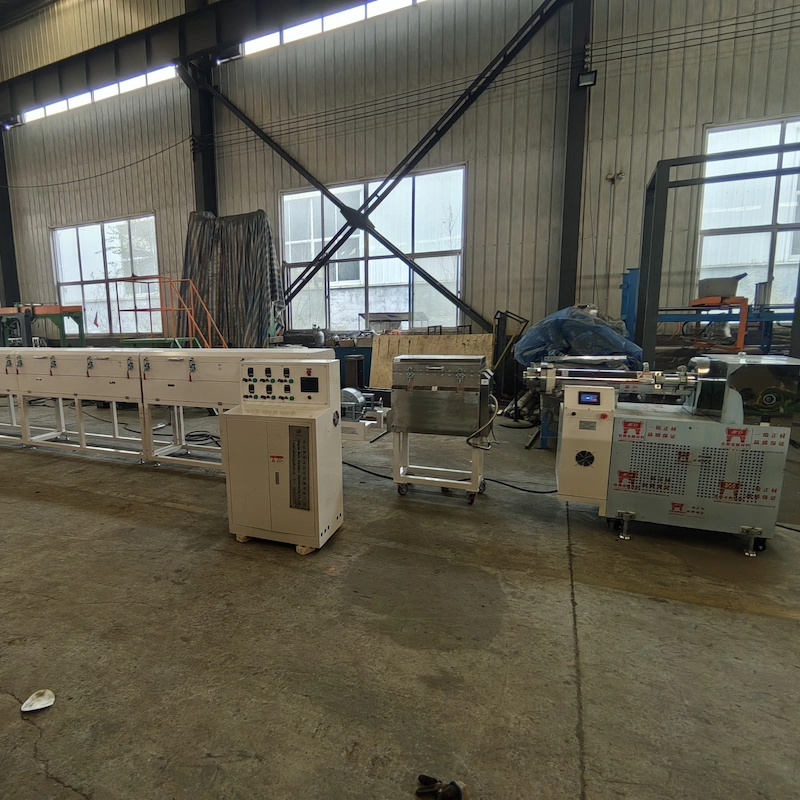
Silicone Rubber EPDM PVC Hose Extruding Line Unique Advantages
The reason why Silicone Rubber EPDM PVC Hose Extruding Line stands out among many pipe manufacturing equipment is that the three types of hoses it can produce each have unique advantages, meeting the diverse needs of different industries.
Advantages of Silicone Rubber Hose
Silicone rubber hose is like a heat-resistant “superman”, with amazing high temperature resistance, and can work stably in a wide temperature range of -60℃ to +250℃. This feature makes it excellent in applications in high temperature environments such as aerospace and automobile engine surroundings. In the engine compartment of an aircraft, high-temperature airflow surges, and silicone rubber hoses are responsible for transporting various coolants and gases. With its excellent high temperature resistance, it can withstand the test of high temperature and ensure the normal operation of the aircraft; in the cooling system and turbocharger pipeline of the automobile engine, silicone rubber hoses also play a key role. Even in the high temperature environment generated by the engine, they can maintain good elasticity and sealing, ensure the normal transportation of coolants and gases, and escort the stable operation of the engine.
In addition to high temperature resistance, silicone rubber hose also has excellent weather resistance and chemical stability. Whether in the scorching desert area or in the humid and rainy coastal area, it can resist the erosion of ultraviolet rays, ozone and various harsh climatic conditions, and will not easily age or crack. In terms of chemical stability, it has good tolerance to most chemicals and can maintain stable performance in corrosive environments such as acids and alkalis. In chemical production, many corrosive liquids and gases need to be transported through pipelines. Silicone rubber hoses have become an ideal choice due to their chemical stability, ensuring the safety and efficiency of chemical production. In addition, silicone rubber also has good electrical insulation properties and physiological inertness. It is non-toxic, odorless, non-corrosive, anti-coagulation, and has good compatibility with the body. Therefore, it has been widely used in the insulation protection of electronic equipment and medical equipment, such as wire and cable insulation sleeves in electronic equipment, infusion tubes in medical equipment, breathing tubes, etc.
Advantages of EPDM hoses
EPDM hoses can be called the “king” of aging resistance. Its molecular structure is composed of chemically stable saturated hydrocarbons, which gives it excellent aging properties such as weather resistance, ozone resistance, sunlight resistance, heat resistance, water resistance, water vapor resistance, UV resistance, and radiation resistance. In applications such as door and window seals, roof waterproofing membranes, and automotive seals in the construction industry, EPDM rubber hoses can be exposed to the natural environment for a long time, resist the influence of various aging factors, maintain good sealing performance and elasticity, and extend the service life of building and automotive parts. For example, the roof waterproofing system of a building uses EPDM rubber hoses as sealing materials. Even after years of wind, sun, rain, snow and frost, it can still effectively prevent rainwater leakage and provide reliable waterproof protection for the building.
The chemical resistance of EPDM rubber hoses is also excellent, and it has good resistance to acids, alkalis, detergents, animal and vegetable oils, alcohols, ketones, etc. In the pipeline transportation of the chemical industry, whether it is corrosive chemicals or various solvents, EPDM rubber hoses can do the job and ensure the safety and stability of the transportation process. It also has excellent insulation properties, high volume resistivity, high breakdown voltage and low dielectric constant, which makes it play an important role in the insulation protection of electrical equipment. In addition, the applicable temperature range of EPDM hose is also very wide, with the lowest use temperature reaching – 40℃ to – 60℃, and the highest use temperature can be used for a long time at 130℃ (EPDM) and 150℃ – 180℃ (EPM), which makes it work normally in equipment under various extreme temperature environments, such as refrigeration equipment in cold areas and piping systems of high-temperature industrial furnaces.
Advantages of Polyvinyl Chloride (PVC) Hose
Polyvinyl chloride hose occupies an important position in the pipe market with its cost advantage. PVC is a relatively cheap raw material. The PVC hose produced by Silicone Rubber EPDM PVC Hose Extruding Line can provide users with economical and affordable pipe solutions while ensuring certain performance. This makes it widely used in some cost-sensitive fields, such as agricultural irrigation, daily water supply and drainage, etc. In agricultural irrigation, a large number of PVC hoses are used to lay irrigation pipes. Their low cost allows farmers to build a complete irrigation system with low investment and increase crop yields. PVC hoses also have good processing properties, are easy to cut, weld, bond, and install. In the installation of water supply and drainage systems in construction projects, construction workers can easily process and connect PVC hoses, greatly improving construction efficiency. It also has good chemical corrosion resistance and can resist general acid and alkali corrosion. In some occasions where the requirements for chemical transport are not high, it can meet the use requirements. In addition, PVC hoses also have good tensile and compressive strength. Although they are not as flexible as some other plastic pipes, they can still maintain structural stability under certain pressure to ensure the normal operation of the pipeline system. Its pipe wall is smooth, the fluid resistance is small, and the water transport capacity is strong, which can effectively improve the liquid transport efficiency.
Application of Silicone Rubber EPDM PVC Hose Extruding Line
Silicone Rubber EPDM PVC Hose Extruding Line plays an indispensable role in many fields with its unique advantages of producing a variety of hoses. From large-scale equipment in industrial manufacturing to the details of daily life, it can be seen.
- Automobile Manufacturing Field
In automobile manufacturing, various rubber hoses are key components for the normal operation of automobiles. Silicone rubber hoses are often used around engines, such as turbocharger pipes, where high temperature environments are the norm. The high temperature resistance of silicone rubber hoses enables them to withstand the impact of high temperature gases, ensuring the stable operation of the turbocharger system and improving the performance of the engine. EPDM rubber hoses are widely used in automobile seals and cooling systems. The sealing strips of car doors and windows need to have good aging resistance to ensure that they can maintain the sealing effect under various climatic conditions. EPDM rubber hoses are perfectly qualified for this task, effectively blocking the intrusion of wind, rain and dust, and improving the comfort of the car; in the engine’s cooling system, it is responsible for conveying coolant, and its chemical resistance enables it to resist the erosion of chemicals in the coolant, ensure the normal operation of the cooling system, and prevent the engine from overheating. PVC hoses are low in cost and are often used in some cost-sensitive automotive parts, such as ventilation ducts in the car. It can effectively guide air flow and provide a comfortable air environment in the car. - Construction Engineering Field
In construction engineering, the hoses produced by Silicone Rubber EPDM PVC Hose Extruding Line are also very useful. Silicone rubber hoses are often used for sealing and waterproofing of building curtain walls due to their good weather resistance and chemical stability. Curtain walls are exposed to the natural environment for a long time and need to withstand the test of ultraviolet rays, wind and rain, etc. Silicone rubber hoses can maintain good elasticity and sealing, prevent rainwater leakage and air infiltration, and extend the service life of curtain walls. EPDM rubber hose plays an important role in roof waterproofing and water supply and drainage systems. Roof waterproofing is a key link in building waterproofing. As a kind of waterproofing membrane, EPDM rubber hose can effectively resist rain erosion and protect the roof structure from damage; in the water supply and drainage system, its corrosion resistance ensures that the water pipe can transport water stably for a long time, whether it is cold water or hot water, it can operate safely and reliably. PVC hose is widely used in building water supply and drainage pipes due to its low cost and easy installation. From indoor water pipe laying to outdoor drainage pipes, it can be seen, providing an economical and practical solution for the building’s water supply and drainage system. - Medical industry
The medical industry has extremely high requirements for the safety and stability of materials. Silicone rubber hoses have become an ideal choice for medical equipment due to their physiological inertness, non-toxicity, odorlessness, non-corrosiveness, and anticoagulant properties. In medical devices, silicone rubber hoses are often used for infusion tubes, urinary catheters, breathing tubes, etc. The infusion tube is in direct contact with the liquid medicine, and the purity and safety of the liquid medicine must be guaranteed. The silicone rubber hose will not react chemically with the liquid medicine, ensuring the safety of the infusion; the urinary catheter needs to be in contact with human tissue for a long time. The good biocompatibility of silicone rubber prevents it from causing human rejection and reduces the pain of patients; in respiratory equipment, the sealing and safety of the breathing tube are crucial. Silicone rubber hoses can meet these requirements and provide patients with smooth breathing support. - Household field
In daily life, we can often see the application of hoses produced by Silicone Rubber EPDM PVC Hose Extruding Line. For example, in the kitchen, PVC hoses are often used for the drainage pipes of sinks. Its corrosion resistance and easy processing make it very convenient to install and use, and it can effectively discharge kitchen wastewater. In the bathroom, silicone rubber hoses can be used as connecting pipes for shower heads. Their softness and high temperature resistance allow us to freely adjust the position of the shower head while being able to withstand the scouring of hot water. EPDM hoses are also used in the air conditioning systems of some families. Their aging resistance and sealing properties ensure the normal operation of the air conditioning system and provide a comfortable temperature environment for the family.
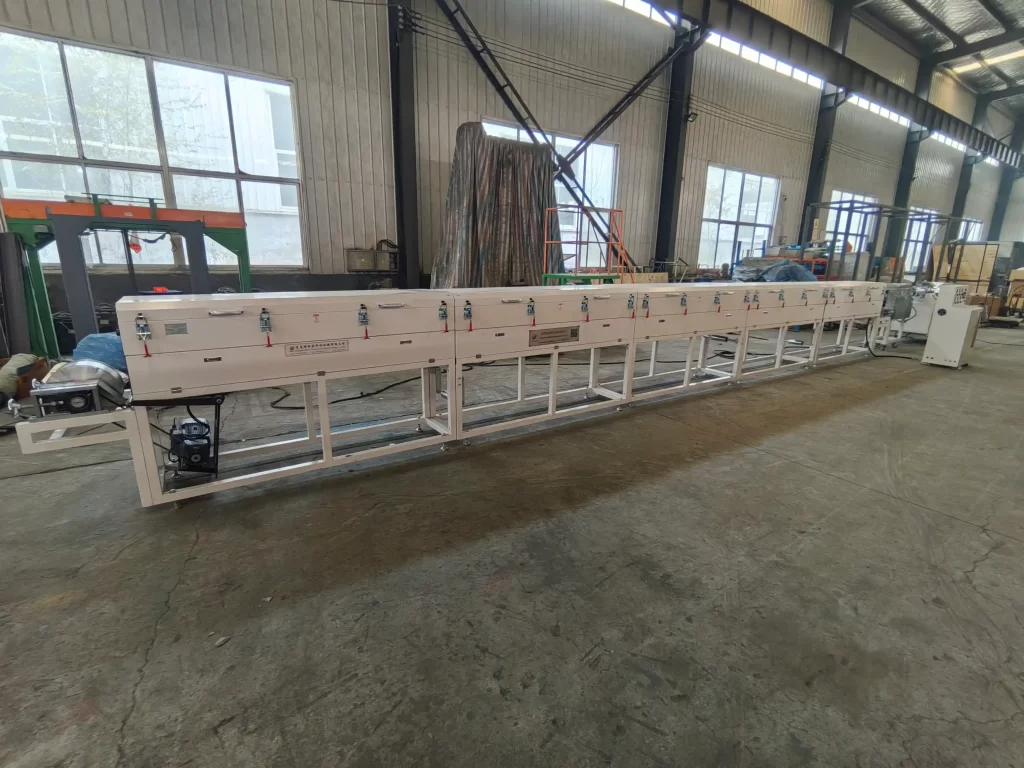
Purchase Guide and Pitfall Avoidance Guide
In industrial production, the purchase of Silicone Rubber EPDM PVC Hose Extruding Line (Silicone Rubber, EPDM Rubber, Polyvinyl Chloride Hose Extruding Line) is a key decision, which is directly related to production efficiency, product quality and the economic benefits of the enterprise. Here are some practical purchase suggestions to help you avoid detours when selecting equipment.
Clear Demand
Before purchasing, you must clarify your production needs. For example, do you need to produce hoses made of silicone rubber, EPDM rubber or polyvinyl chloride? Different materials have different requirements for the process and equipment parameters of the extrusion production line. If you mainly produce silicone rubber hoses, due to the special properties of silicone rubber, the extrusion production line needs to have higher temperature control accuracy to ensure that the silicone rubber maintains good performance during processing. You also need to consider the scale of production, whether it is a small-scale trial production or large-scale industrial production. For small-scale production, you can choose simpler and lower-cost equipment; while for large-scale production, the equipment needs to have a higher degree of automation and production efficiency to meet the needs of a large number of orders. In addition, the size specifications of the product are also very important. Different sizes of hoses require different specifications of extrusion dies and equipment parameters to ensure that the equipment can produce products that meet the requirements.
Investigate the brand
The brand is an important guarantee for product quality and after-sales service. When choosing Silicone Rubber EPDM PVC Hose Extruding Line, give priority to well-known brands. Well-known brands usually have many years of production experience, advanced production technology and strict quality control system, which can ensure the quality and stability of the equipment. Like some internationally renowned brands, they have a good reputation in the industry. The extrusion production lines they produce not only have excellent performance, but also have a complete after-sales service network worldwide, which can promptly solve problems encountered by users during the use of the equipment. You can learn about the product quality, user reviews, market share and other information of each brand through online searches, industry forums, and consulting peers, so as to choose the brand that suits you best. At the same time, don’t just look at the brand’s popularity, but also consider the brand’s cost-effectiveness in combination with your budget and actual needs.
Evaluate after-sales service
After-sales service is an important factor that cannot be ignored when purchasing equipment. A device will inevitably encounter various faults during use. Good after-sales service can ensure that the equipment is repaired in time, reduce downtime, and reduce production losses. When purchasing, you should understand whether the manufacturer provides timely technical support, such as whether there are professional technicians who can answer questions encountered by users during the use of the equipment at any time; whether the equipment installation and commissioning services are provided to ensure that the equipment can operate normally; whether the equipment maintenance services are provided to extend the service life of the equipment. You should also pay attention to the manufacturer’s spare parts supply to ensure that when the equipment needs to replace spare parts, the original spare parts can be obtained in time to ensure the quality of equipment maintenance. You can consult the manufacturer about the specific content and commitment of after-sales service, check the manufacturer’s after-sales service cases, and understand the actual effect of its after-sales service.
Outlook for future development trends
Looking to the future, Silicone Rubber EPDM PVC Hose Extruding Line is heading towards a new journey of development full of changes and opportunities under the interweaving influence of multiple factors such as technological innovation, environmental protection requirements and changes in market demand.
In the forefront of technological innovation, intelligent and automated upgrades are significant trends. With the in-depth development of Industry 4.0 and smart manufacturing concepts, future extrusion production lines will be equipped with more advanced sensors and intelligent control systems. These systems can monitor various parameters in the production process in real time, such as temperature, pressure, screw speed, etc., and automatically make precise adjustments according to preset programs. Once an abnormal situation occurs, the system can quickly issue an alarm and start an emergency response mechanism to effectively avoid production accidents and ensure the continuity and stability of production. Imagine that in a modern pipe production plant, Silicone Rubber EPDM PVC Hose Extruding Line operates efficiently under the command of an intelligent system. Operators can easily control the overall situation through monitoring terminals, greatly improving production efficiency, significantly reducing labor costs, and making product quality more stable and reliable.
With the increasing awareness of environmental protection, environmental protection requirements are becoming increasingly stringent, which poses new challenges and opportunities to Silicone Rubber EPDM PVC Hose Extruding Line. On the one hand, energy conservation and emission reduction in the production process have become key goals. Equipment manufacturers will focus on developing more efficient heating systems and power drive devices to reduce energy consumption; at the same time, optimize production processes to reduce the generation of waste gas, wastewater and waste residue. On the other hand, the environmental protection requirements for raw materials are also getting higher and higher. In the future, raw materials such as silicone rubber, EPDM rubber and polyvinyl chloride will develop in a greener and more recyclable direction to meet the needs of sustainable development. For example, the research and development and application of degradable PVC materials will open up new market space for PVC hoses in the field of environmental protection.