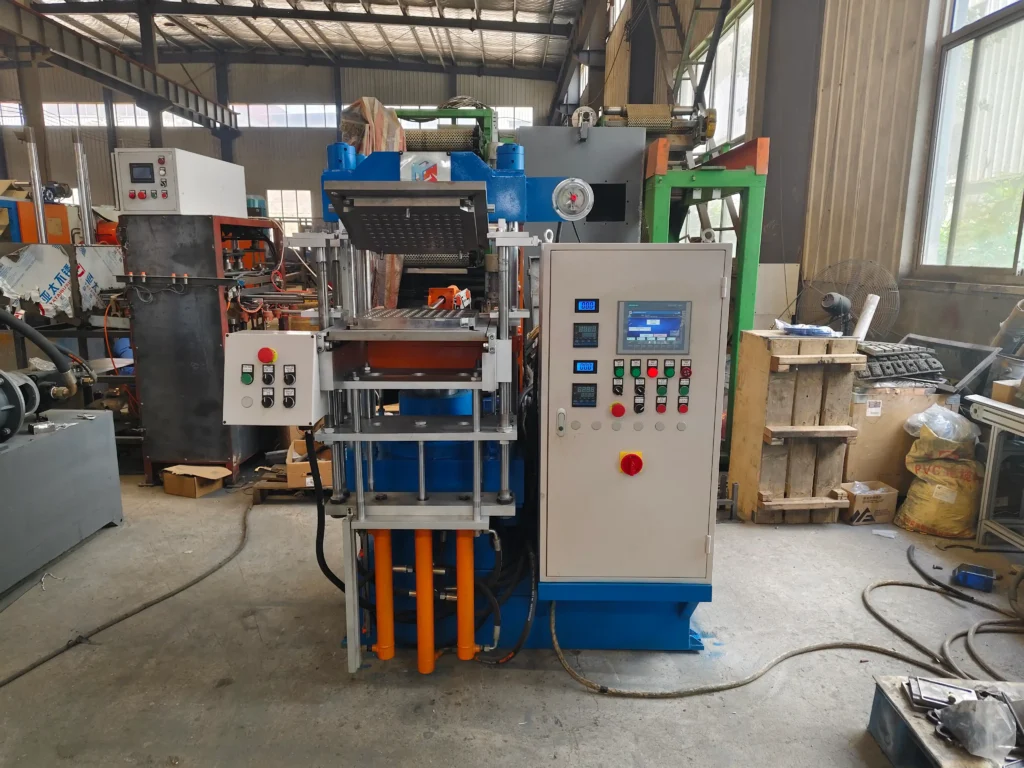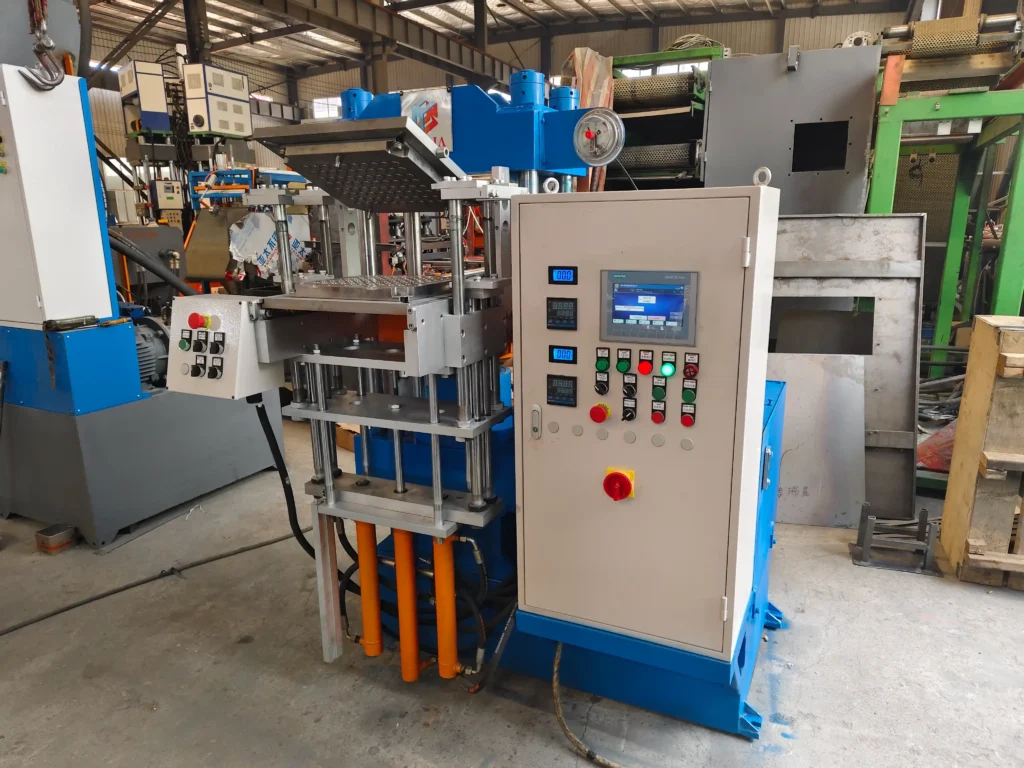
An automatic rubber vulcanizing machine is a specialized piece of equipment used in the rubber manufacturing industry to process raw rubber into a more durable and stable material through the vulcanization process. Vulcanization involves heating rubber under pressure with sulfur or other curatives, which enhances its physical properties such as elasticity, strength, and resistance to temperature variations.
This type of machine typically consists of several key components including a heating system, pressure control unit, mold assembly, and an automated control panel. The automation feature allows for precise regulation of time, temperature, and pressure—critical factors that determine the quality of the final product. Once the raw rubber compound is placed into the mold cavity, the machine closes the mold, applies heat and pressure, and maintains these conditions for a predetermined period to ensure complete curing.
Automatic rubber vulcanizing machines are widely used in the production of various rubber products such as seals, gaskets, tires, hoses, and industrial rubber parts. These machines offer numerous advantages over manual vulcanization methods, including higher production efficiency, consistent product quality, reduced labor costs, and improved safety standards.
Modern versions of these machines often incorporate programmable logic controllers (PLCs) and human-machine interfaces (HMIs), enabling operators to monitor and adjust processing parameters in real-time. Some advanced models also come equipped with data logging capabilities, allowing manufacturers to track production history and maintain compliance with quality control standards.
The selection of an appropriate automatic rubber vulcanizing machine depends on several factors such as the size and complexity of the rubber part being produced, the required production volume, and the specific material formulation used. With ongoing advancements in automation and materials science, these machines continue to evolve, offering greater precision and flexibility to meet the demands of modern manufacturing processes.