
Getting to Know Rubber Batch Off Cooling Lines
Enter a modern rubber production facility and you’ll hear a full industrial symphony of machines. It’s a wonderful chemical reaction that the rubber raw materials undergo in the enormous reactor, this time induced by high temperature and catalyst, towards slowly developing into rubber of specific properties. This complex production process has one key link that cannot be ignored: the rubber batch off cooling line.
The rubber after passed the production processes of mixing, molding, and more will be in a state of high-temperature. At that time, the rubber is still in an unstable state, and should be cooled. Cooling of the rubber Batch Off is very necessary. It is simply an equipment system used specifically to cool the rubber batches that are produced and take them to an alright off-line condition.
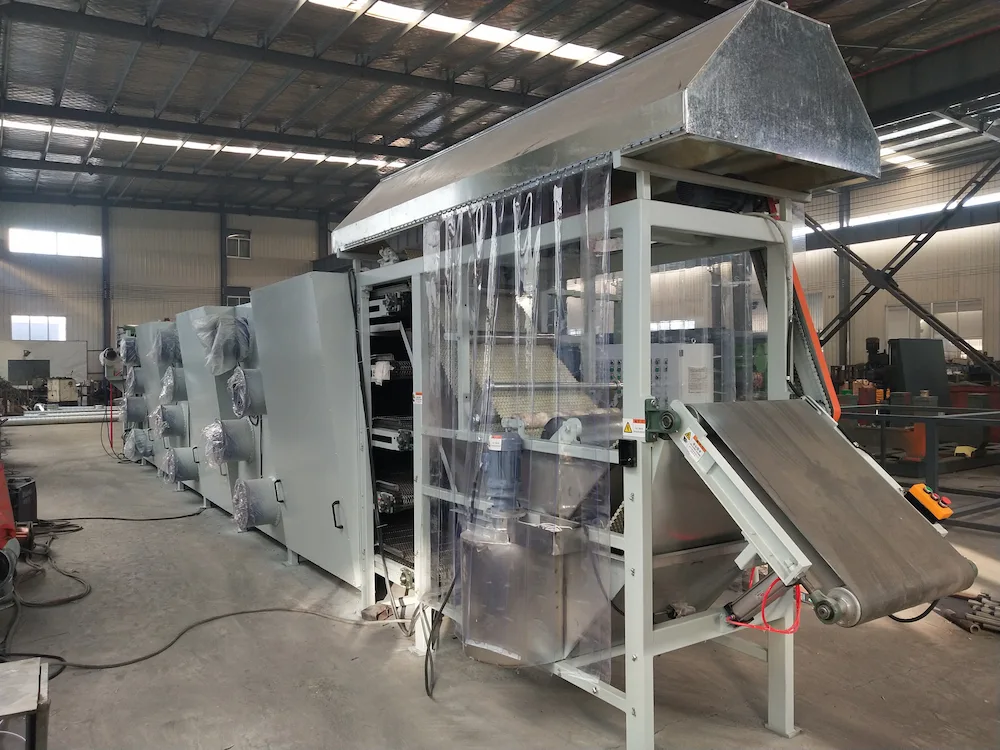
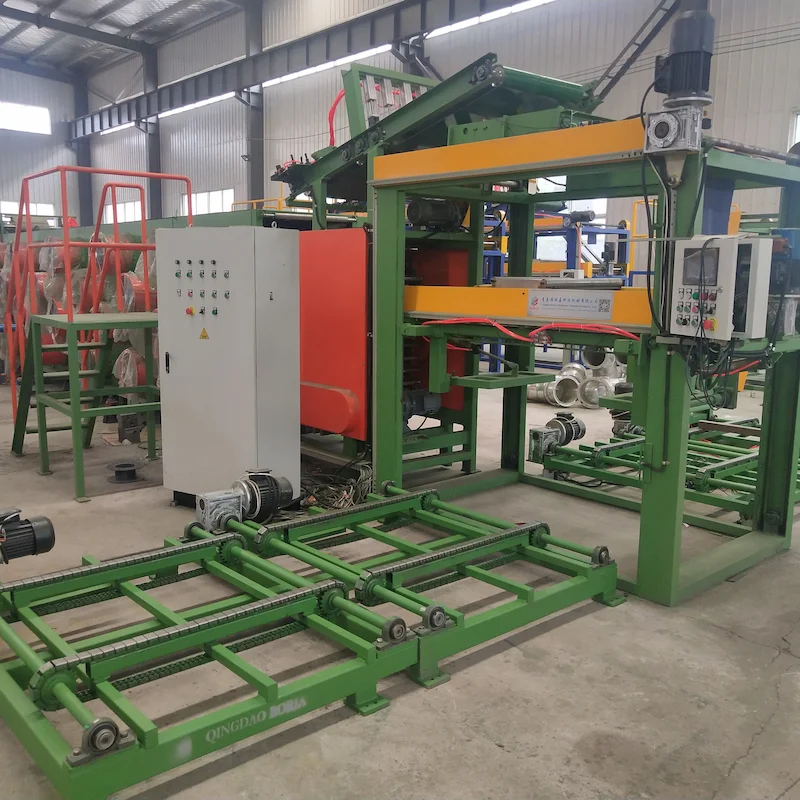
The general structure includes cooler, transporter, and auxiliary control systems. There are a variety of cooler forms, but air cooling, water cooling, or a combination appear to be the most common. They achieve this through the use of a strong fan that blows cold air onto the surface of the rubber to hasten heat dissipation while water cooling uses cold water circulating through the rubber, taking away its heat by means of heat exchange, thereby speeding up the cooling process and attaining stable physical and chemical properties. The transporter takes up the role of an efficient transportation machine that moves the rubber from the cooling section to the offline section in a continuous manner, so that the entire process does not break. The control system is the ‘brain’ so it carefully regulates the right cooling time, temperature, and conveying speed for each batch of rubber to be cooled just right.
Significance in Rubber Production
- Guaranteeing Product Quality
Proper cooling is extremely important in connection with the stability of the rubber molecular structure. When it cools under conditions of high temperature, the rubber molecules are highly active in movement and, therefore, the structure is rather unstable. Failure to cool promptly may cause the rubber molecules to overly cross-link or rearrange, thus creating deviations in product performance.
Internal stress is the result of uneven cooling of rubber products. This will happen when, in use, the product releases the internal stress that deforms it. For instance, after some time of use, rubber seals might get twisted and deformed shape, which brings about poor sealing and fail to work properly. At extreme conditions, internal stress cracks the product itself. For instance, during its operation, longitudinal or transverse cracks in the rubber conveyor belt not just affect the service life of the conveyor belt but may cause accidents in production. Rubber Batch Off Cooling Line’s even and stable cooling has completely removed any internal force reordering rubber molecules in an orderly fashion and with a stable state, preventing distorting and cracking of the product; it very strictly complies with the dimensional accuracy and physical property standards of rubber products under varied service needs of different industries. - Enhancing how efficiently production is done
A Batchoff Cooling Line is an ‘orchestrator of production rhythm,’ very effective and plays a crucial role toward minimizing the waiting time between the subsequent stages related to rubber production. The hot rubber, after molding operations have been completed, is ready to be immediately put on cooling by the Batchoff Cooling Line without any further time delay in intermediating infrastructures for a fast transition of hot rubber to enter the cooling process and hence to facilitate early entry of that rubber into the cooling stage, thereby shaving lead times off the flow. Meanwhile, Line’s efficient air cooling is such that rubber may get offline temperature more quickly in lesser time, reducing lead times initially of the followed-through processes and indirectly enhancing use rate of production equipment.
Taking an example of tire production, after molding, tires need to be quickly cooled for subsequent quality inspection, packaging, and other processes. If the tires are not cooled fast enough, a huge number of tires will accumulate in the cooling area leading to wastage of production space with other processes being unserved later. It is due to the efficient rubber batch off cooling line that ensures these tires are quickly cooled out of line; therefore, tires on the production line could be timely circulated thereby maintaining its continuity and its proper functioning for the entire efficient performance of the tire production system increasing production efficiency and allowing enterprises to produce more quality products within similar time thereby enhancing their competitiveness in the market.
Areas of Application Scanning
Making Tires
The Rubber Batch Off Cooling Line is vital to the tire production process. A tire comprises mainly three parts: the tread, sidewall, and cord layer; obviously, most parts require rubber. Take the tread for instance. Since it is the part of the tire that comes into contact with the ground, it needs to exhibit good wear resistance, skid resistance, and aging resistance. In t<he production process of tread rubber mixing and extrusion create a high temperature state for the rubber. If it is not cooled in time, then molecular structure will change and consequently performance available will be decreased. By accurately cooling the Rubber Batch Off Cooling Line, the molecular makeup of the tread rubber can be fast stabilized, making sure that the tread has good physical and chemical qualities, thus enhancing the wear resistance and grip of the tire and making sure of the safety and stability of vehicle driving.
The sidewall rubber part, it mostly acts in the capacity of shielding the cord layer and backing up the tread, and should possess a certain level of flexibility plus strength. In making sidewall rubber, the cooling line is very important as well. Proper cooling can get rid of the internal stress of the rubber, stop the sidewall from changing shape or breaking during later handling and use; and ensure both the total quality plus service life of the tire.
Industrial rubber products
In the industrial field, there is a wide application of rubber products. Seals, hoses, etc. are common industrial rubber products and have unique application characteristics in their production process.
For instance, consider seals. Seals should have excellent sealing performance, corrosion resistance, and aging resistance so that they can function normally in different conditions of complex industrial environments. During production, the rubber gets cooled through a cooling line after it has been molded. Since there are high requirements for the dimensional accuracy and surface quality of seals, the speed at which they cool and the uniformity of the cooling line must be strictly controlled. If the speed is too high, then upon shrinking, the rubber will do so in an uneven manner and result in sizing deviations for the seal; if there is not uniform cooling, then stress concentration areas may develop on the surface of the seal which would subsequently degrade both its sealing performance and service life. Thus, in the making of seals, the cooling line typically uses a gentler cooling way and is set up with a high-accuracy temperature control system to make sure that the seal can be cooled evenly and steadily to suit the tight needs of industrial uses.
Hose production is inseparable from the cooling lines. Basically, hoses are mostly liquid and gas conveyances and they must have good pressure resistance, corrosion resistance, and flexibility. In the extrusion shaping of the hose, the hot rubber tube blank will be cooled with a cooling water tank. Parameters in that tank such as water temperature and water flow rate hugely influence the performance of a hose. Appropriate water temperature can quickly cool and set the rubber tube blank while ensuring internal structure stability; appropriate water flow rate can ensure uniform cooling on the surface of the hose to avoid local overheating or overcooling. Besides this, special-purpose hoses, for example, high-pressure hoses may also require special treatment in their cooling process like segmented cooling to higher performance requirements.
Technological development and innovation trends
Emergence of new technologies
As the wave of the science and technology rapid development era unfolds, Rubber Batch Off Cooling Line has also ushered in a series of impressive new technologies that have injected new vitality into rubber production.
- The use of smart temperature control tech makes cooling even more spot-on and effective. High-tech temp sensors can watch the rubber’s heat in real-time and right, noting every small heat change. These sensors act like keen “temp detectives” that fast send the picked-up info to the smart control system. The wise control system acts like a seasoned commander, tweaking the working rules of the cool gear just in time and spot-on way based on set programs and algorithms. For instance, if the temperature of a specified region on the rubber is detected to be significantly high, then the system shall automatically raise the cooling strength for that region and rapidly bring back the rubber’s temperature within normal limits by modifying both the flow and temperature of the cooling medium or alternatively increasing the wind speed in air cooling. This ensures uniform rubber temperature and stable properties throughout the whole cooling process.
- In addition to the research and development, and application of new cooling media, the changes in the cooling line have also been brought about. Some high thermal conductivity coolants have slowly come into being. New synthetic coolants are one among them whose thermal conductivity is several times that of traditional water or oil-based coolants. This implies that under similar conditions for cooling, the new cooling media will absorb the heat from rubber faster; hence, significantly reducing the time required for cooling. In addition to having good chemical stability and low corrosiveness (which means not much damage to the equipment), it prolongs equipment service life and lowers maintenance costs. More so, some other environmentally friendly coolants have also attracted much attention-toxicity free, harmless, biodegradable, meeting the requirements of effective cooling while reducing negative impacts on the environment.
- Automated monitoring equipment realizes the comprehensive and continuous monitoring of the operating conditions of the cooling line. With this installation of different types of sensors on the cooling line, for example, pressure sensors, flow sensors, and vibration sensors, etc., real-time monitoring can be achieved for key parameters of the cooling system. As soon as any parameter goes out of its normal value, an alarm will be immediately initiated by the system together with fault localization through data analysis giving precise fault information to maintenance personnel to enable them to solve problems rapidly. This automated monitoring technology not only ensures safety and stability in production but also makes it possible to find potential problems beforehand so that production interruptions due to equipment failure can be averted and hence reduces production costs.
Environmental protection and sustainable development
In the global trend of environmental protection and sustainable development, Rubber Batch Off Cooling Line is actively exploring innovations and undertaking measures to minimize the environmental impact and realize green production.
- Regarding water saving, most cooling shops took in advanced water recycling techniques. By building a complete cooling water care system, the waste water made during the cooling is picked up, fixed and used again. The fixed water can go back to the cooling system to keep on playing a cooling part, greatly helping how well water resources are used. For example, some factories use reverse osmosis filter ways and ion exchange resin ways to fully treat waste water get rid of dirt salt and germs so that the clean water comes close to even beats the quality rules of raw water makes the reuse of water resources possible and lowers the amount of fresh used.
- In terms of energy saving, on the one hand, by optimizing the structure and performance of cooling equipment, improvement happens in cooling efficiency and reduction takes place in energy consumption. For example, new high-efficiency exchangers can help improve the efficiency of heat exchange and enable the medium to take up the heat from rubber more quickly thereby reducing both cooling time and energy consumption. On the other hand, intelligent energy management systems can introduce real-time adjustments in operating parameters for cooling equipment based on production loads and rubber-cooling requirements to allocate and use energy efficiently. It will automatically scale down power when production load is light hence avoiding wastage of energy through such a system; it will also make timely adjustments for equipment parameters to ensure that adequate cooling is provided during heavy production while avoiding excessive energy consumption.
- Regarding the chemical substance, more firms are starting to follow a trend of green and eco-friendly cooling treatments and materials. Refrain from using media and additives for cooling that contain harmful ingredients because of their potential peril towards the environment alongside human health. For instance, certain enterprises have embraced fluorine-free coolants rather than the conventional fluorine-containing ones for the destruction caused by fluoride to the ozone layer. Simultaneously during the cleaning & maintaining of the machinery, make an attempt to utilize environmentally-friendly cleaning products & lubricants so as to lower down the emission levels of chemical compounds.
Rubber Batch Off Cooling Line is one important and significant aspect that cannot be replaced in the production of rubber. It is a primary step for good quality rubber products plus to enhance the efficiency of production. From just being a simple cooling device, this system has now become one of the most complex systems and has integrated several advanced technologies, its development history has been there with continuous progress in the rubber industry.
Looking ahead, with the ongoing development of science and technology, Rubber Batch Off Cooling Line will probably see more breakthroughs. Based on already present new technologies like smart temperature control and automatic monitoring, cooler smarter and adaptive cooling systems might come. Systems that can automatically adjust the parameters of cooling in real-time for the rubber and constantly changing production conditions would enable true precision cooling and hence further enhancement of the quality stability of rubber products.
The research and development of new cooling media and materials will bring new changes to the cooling line, improving the efficiency and effect of cooling while reducing the impact on the environment. This better meets the needs of sustainable development. Meanwhile, as applications of the rubber industry in automotive, industrial, and other fields expand and deepen, higher requirements will be imposed on the performance and adaptability of the Rubber Batch Off Cooling Line. In this way, it promotes high-end, intelligent, and green development for keeping a strong competitive rubber industry in the global market that serves to provide more high-quality and reliable rubber products for other industrial developments.