
A Rubber Compound Production Line takes raw materials and makes special rubber compounds. These compounds have certain properties. The system mixes things like natural or synthetic rubber, carbon black, and chemical additives. It blends them very carefully. Many industries use this process. The compound’s quality and consistency are very important. They affect how long products last, how well they work, and how safe they are.
- In the tire industry, careful mixing and compounding are important. They help decide how long the tread lasts, how well the tire grips, and how it handles heat.
- Strong quality control checks make sure tires are always the same and work well.
Rubber Compound Production Line Steps
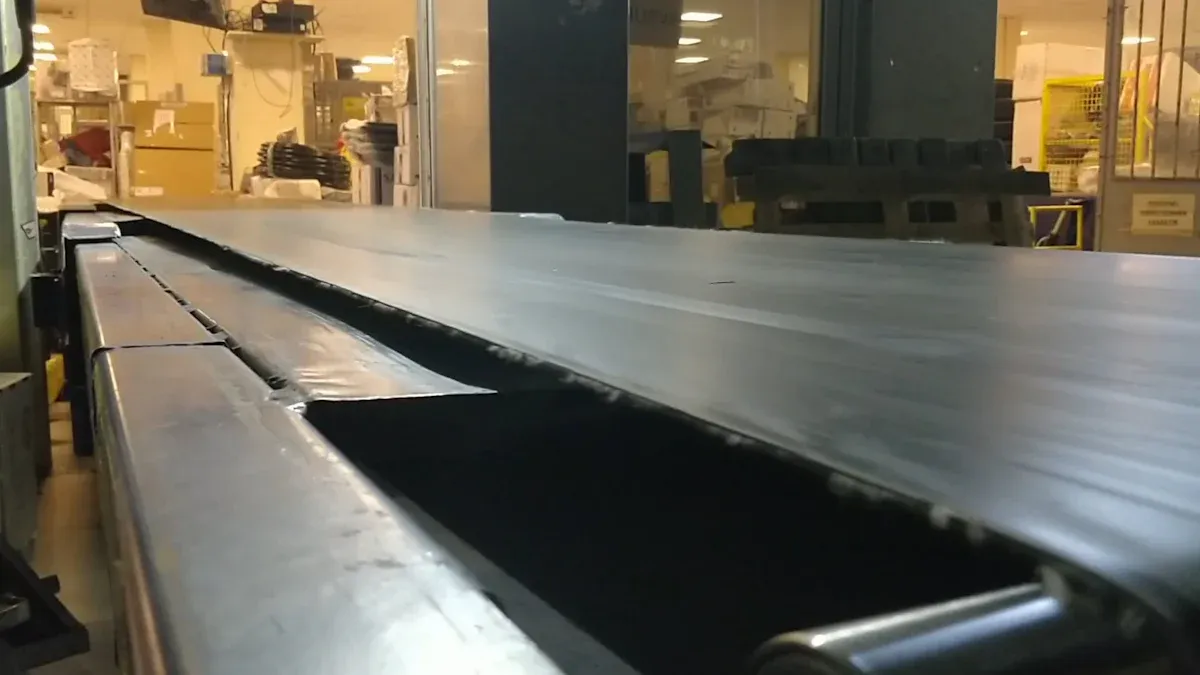
A Rubber Compound Production Line uses careful steps to change raw rubber into a finished compound. Each step helps make the final product better.
Mastication
Mastication is the first step in the Rubber Compound Production Line. Machines break big pieces of raw rubber into smaller ones. This makes the rubber softer and easier to mix.
- Machines like jaw crushers, roller crushers, and two-roll rubber mills make the rubber smaller and less thick.
- Mastication helps the rubber mix well with other things. This gives the rubber more strength, flexibility, and durability.
Tip: Good mastication makes the rubber soft enough for the next steps. This keeps the quality the same in every batch.
Mixing with Additives
After mastication, the soft rubber goes to mixing. Workers add different things to get the right properties.
Common additives are:
- Fillers like carbon black or silica make the rubber stronger and last longer
- Plasticizers help the rubber bend and flow better
- Tackifiers help layers stick together
- Process aids and internal lubricants make mixing easier and stop sticking
- Protectants like antioxidants and antiozonants slow down aging
- Accelerators and activators make curing faster
- Curatives like sulfur help form cross-links during vulcanization
- Colorants and special additives are used for certain needs
The type and amount of each additive can change how hard, flexible, or heat-resistant the rubber is. Some additives also make mixing faster, safer, and more even.
Dispersion
Dispersion means spreading all the additives evenly in the rubber. Even dispersion is very important in the Rubber Compound Production Line. It makes sure every part of the compound is the same.
- Good dispersion stops clumps from forming, which could make the product weak.
- Special mixing machines and careful control of heat and speed help spread everything evenly.
Note: Even dispersion gives the rubber better strength and flexibility. It also lowers the chance of problems.
| Testing Method | What It Measures |
|---|---|
| Interferometric Microscopy (IFM) | Size and number of undispersed particles |
| Optical Microscopy | Shows where fillers are in the rubber |
| X-ray Computed Tomography (CT) | Shows filler amount and where it is in 3D |
| Tensile and Tear Testing | Checks how dispersion changes strength and durability |
Vulcanization
Vulcanization is a chemical step that makes the mixed rubber strong and stretchy. The compound is heated and pressed in a vulcanization press.
- Sulfur and accelerators make cross-links between rubber molecules. This forms a strong network.
- The size and type of these cross-links decide the rubber’s final properties, like heat resistance, flexibility, and strength.
- Heat and pressure must be watched closely to stop under- or over-vulcanization.
Vulcanization makes the rubber tough, stretchy, and able to handle heat and wear. This is very important for things like tires and seals.
Quality Testing
Quality testing is the last step in the Rubber Compound Production Line. This step checks if the compound meets all the needed rules before it is used or shipped.
Standard tests are:
- Chemical analysis (ash content, sulfur content, oil content)
- Rheological and mechanical tests (viscosity, stress relaxation, adhesion)
- Identification and composition analysis (infrared spectrophotometry, chromatography)
- Dynamic and processing property measurements (strain softening, extrusion)
- Adhesion and thermal property tests
These tests make sure the compound is safe, the same every time, and ready to use.
Regular quality checks stop problems and make sure every batch meets the rules.
Key Equipment
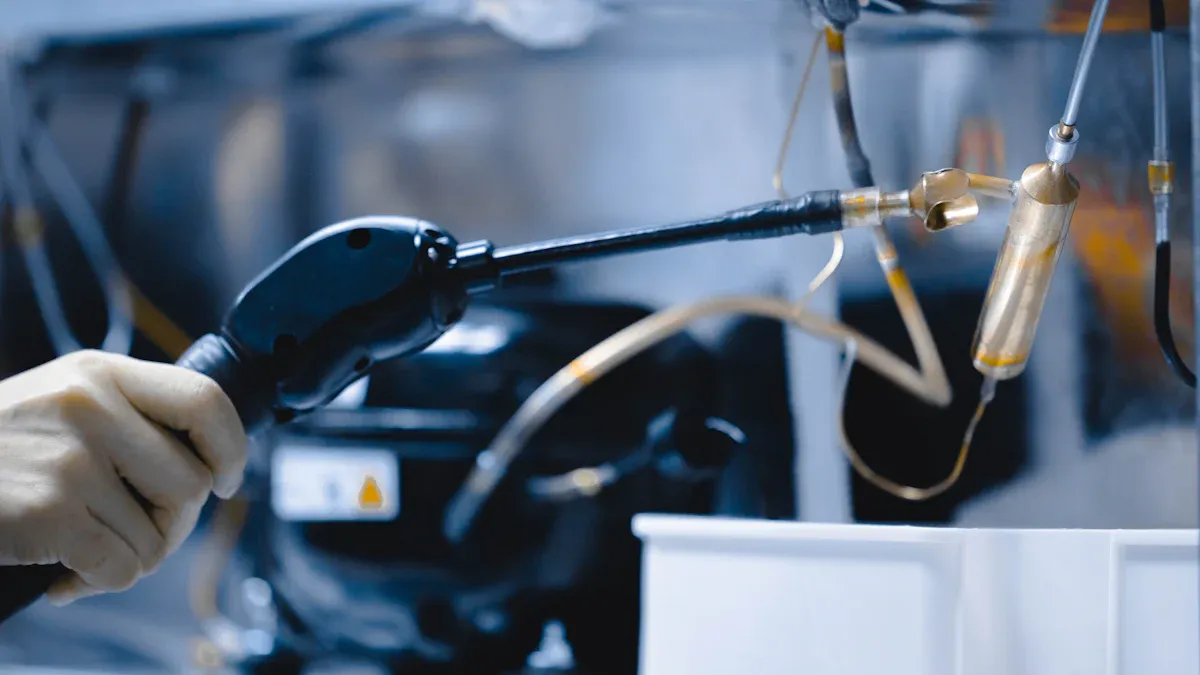
A rubber compound production line needs many machines. Each machine has a special job. These jobs help turn raw materials into good rubber compounds. The table below lists the main machines and what they do:
| Equipment | Role in Rubber Compound Production |
|---|---|
| Rubber Mixing Mill | Mixes raw materials at high temperature and pressure |
| Rubber Kneader Machine | Compounds and blends rubber materials |
| Two-Roll Mill | Refines and disperses additives |
| Rubber Extruder | Shapes and processes rubber compound |
| Rubber Vulcanizing Press | Cures and vulcanizes rubber compounds |
| Granulator | Converts compound into granules for storage |
| Calender Machine | Shapes rubber sheets |
| Batch Off Cooler | Cools rubber after processing |
Mixers
Mixers are very important in this process. Internal mixers, double arm mixers, and kneader machines use strong force to blend rubber, fillers, and additives. These machines break up clumps and spread things out. Double arm mixers have two blades that move in different ways. This action kneads and pulls the rubber to mix it well. Workers watch the speed, heat, and time to get the best mix. Good mixing makes rubber strong and flexible.
Tip: Mixing well stops weak spots and helps every batch meet quality rules.
Two-Roll Mills
Two-roll mills make the rubber mixture better after the first mix. The rubber goes between two big rollers that spin at different speeds. This spreads the additives and fillers all through the rubber. Two-roll mills have some good points:
| Advantage | Description |
|---|---|
| Optimal Temperature Control | Cooled rollers keep the rubber from getting too hot. |
| High-Quality Output | Gives even mixing, good for tough materials. |
| Cost-Effectiveness | Saves energy and lowers repair costs. |
| Durability | Made to last in busy places. |
These mills can work with many materials and do not need much space. That is why factories and labs like to use them.
Extruders
Extruders shape rubber into long pieces. The machine heats and pushes soft rubber through a die. Inside, a screw mixes and presses the rubber. When the rubber comes out, it forms tubes, strips, or sheets. Workers control the heat and pressure to keep the rubber smooth and shaped right. This step gets the rubber ready for vulcanization and final use.
Vulcanization Presses
Vulcanization presses cure the shaped rubber. The press uses hot plates and strong pressure to start cross-linking in the rubber. Workers put the rubber in a mold, close the press, and use heat and pressure for a set time. Digital controls watch the heat and pressure to make sure curing is even. Safety systems keep workers and machines safe.
| Component | Role in Ensuring Consistent Curing |
|---|---|
| Heated Plates | Give steady and even heat to the rubber. |
| Hydraulic System | Pushes down with even pressure on the rubber. |
| Control System | Sets the right heat, pressure, and time for curing. |
Even curing in vulcanization presses makes rubber strong, stretchy, and tough.
Benefits and Applications
Custom Properties
Rubber compound production lines let companies make materials with special features. They can change the mix of rubber and additives to fit what each product needs.
- Companies can make rubber stronger and more flexible by changing the mix.
- Some compounds work well in very hot or cold places.
- Natural rubber breaks down faster than plastic, so it is better for the environment.
- Special rubber mixes last longer, bend more, and resist chemicals better than many plastics.
- These rubber compounds also help reduce noise and shaking in cars and factories.
- Additives like carbon black and silica make rubber stronger and protect it from sunlight and wearing out.
- Plasticizers make rubber softer and easier to bend, which helps in seals and gaskets.
- Antioxidants and flame retardants help rubber last longer and keep people safe in tough jobs.
Custom rubber mixes help many fields, like cars, planes, and medicine. For example, car tires grip the road better and last longer. Seals in planes can handle heat and pressure. Medical tools use rubber that is safe for people and can resist chemicals.
Companies can talk to experts to pick the best additives. This helps them get good performance, save money, and protect the environment.
Common Uses
Rubber compounds made on these lines are used in many jobs. These rubbers are found in things that need to be strong, bendy, and tough against harsh conditions.
| Rubber Type | Common Industrial Applications | Key Properties / Uses |
|---|---|---|
| NR (Natural Rubber) | Automotive parts, dynamic applications | High elongation, resilience |
| SBR (Styrene-Butadiene Rubber) | Tires, blended products | Good mechanical properties |
| EPDM | Construction seals, electrical insulation | Weather, ozone, heat resistance |
| CR (Neoprene) | General-purpose, flame-retardant parts | Oil, chemical, sunlight resistance |
| NBR (Nitrile Rubber) | Hoses, seals, food processing | Oil and fuel resistance |
| HNBR | High-temperature, dynamic load parts | Enhanced heat and chemical resistance |
| FKM (Fluoroelastomers) | Chemical, high-heat applications | Superior chemical and heat resistance |
People use these rubbers in gaskets, hoses, belts, tires, O-rings, and molded parts. Many industries, like cars, planes, building, medicine, and electricity, use rubber for sealing, keeping things safe, and stopping shocks. Rubber is strong and useful, so it is important for today’s world.
Production Line Considerations
Quality Control
Quality control is very important in a Rubber Compound Production Line. Companies follow many steps to make sure each batch is good:
- They check raw materials with special tools to see if they are pure.
- Machines mix ingredients and watch the process to avoid mistakes.
- Workers test how thick and heavy the mix is to keep it right.
- They heat the materials to see if they can handle high temperatures.
- They test if the mix is strong and if it lasts a long time.
- They look for dangerous things to make sure the mix is safe.
- They test each batch at the end to see if it is strong and stretches enough.
- They use rules from groups like ASTM, ISO, and DIN to keep things the same.
- They make samples carefully, keep things clean, and write down results.
Checking quality often helps stop problems, saves materials, and keeps customers happy.
Efficiency
Efficiency in a Rubber Compound Production Line needs many things. Workers watch how much of each ingredient is used. They also check the temperature, thickness, and evenness of the mix. Machines change recipes if sensors find a problem. This helps stop mistakes and saves materials. Screens and alarms help workers fix problems fast. Companies watch how even the batches are, how much energy is used, and if machines work well. They also check how long each batch takes. These steps help the line run well and save money.
Using live data and machines makes quality better and helps the environment.
Safety and Environment
Safety and caring for the environment are very important in rubber making. Factories use dust control and fix machines often to stop dust from building up. Dust can cause fires or explosions. Workers get training and wear gloves and long sleeves to keep chemicals off their skin. Special fans and quiet machines help keep air clean and noise low. Safety devices on machines help stop accidents.
Rules say companies must use safer materials and control pollution. For example, the European Union does not allow some metals, dyes, or flame retardants. Companies must also lower pollution by cleaning air, dust, and noise. Many factories use safer materials to follow these rules.
Good safety and care for the environment keep workers, neighbors, and the earth safe.
A Rubber Compound Production Line has important steps to make good rubber products.
- Compounding: Raw rubber and additives are mixed in a Banbury mixer.
- Shaping: The compound is formed by machines like extruders, calenders, or molds.
- Vulcanization: The shaped rubber is cured in presses to make it strong and last longer.
| Stage | Impact on Quality |
|---|---|
| Compounding | Makes the rubber strong and bendy |
| Shaping | Gives the product the right shape |
| Vulcanization | Helps the rubber last and stay safe |
Knowing about each step helps workers make better products and meet what industries want.